

As engagement rings and wedding bands continue to move away from tradition-for-tradition’s sake, 2026 is shaping up to be a year defined by individuality, storytelling, and modern heirloom design. From bold golds and vintage-inspired stones to deeply personal materials and meaningful customization, today’s couples are rewriting the rules of what forever jewelry looks like.
We asked the design experts at Rustic & Main to talk about the ring trends set to define 2026 for both men and women. Drawing inspiration from fashion, interior design, and cultural moments, they share how shifting values around sustainability, personalization, and self-expression are influencing everything from engagement rings to men’s wedding bands.
What major trends in rings are you seeing emerge in 2026, for men and women?
What we’ve learned is that jewelry design tends to follow trends in home décor and fashion. Right now there is a big recurrence in furniture design with floral patterns, wallpaper, skirting and cording. We have seen some traditional design elements from the 1990s pop up in jewelry design, but with a twist—think of what Hilary from The Fresh Prince of Bel-Air might have shopped for but updated. Bold gold is replacing dainty pieces, women are mixing up the different gold colors in the same piece, and larger center stones and pearls are all in the mix right now.
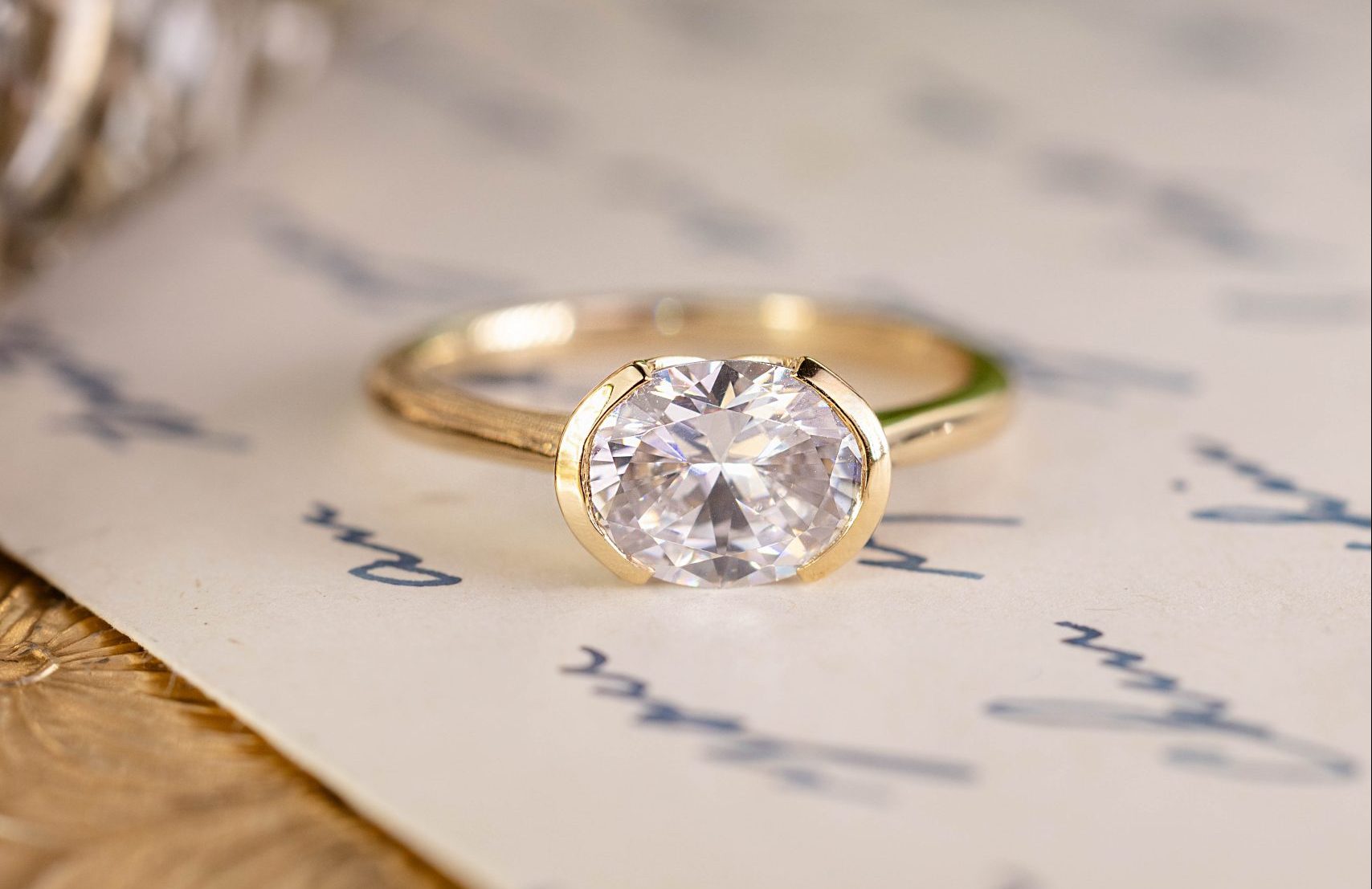
Bezel-set stones—where metal wraps all the way around the edge of the stone instead of using prongs—were very popular. That look has been reimagined with half-bezel settings and stones mounted east to west.
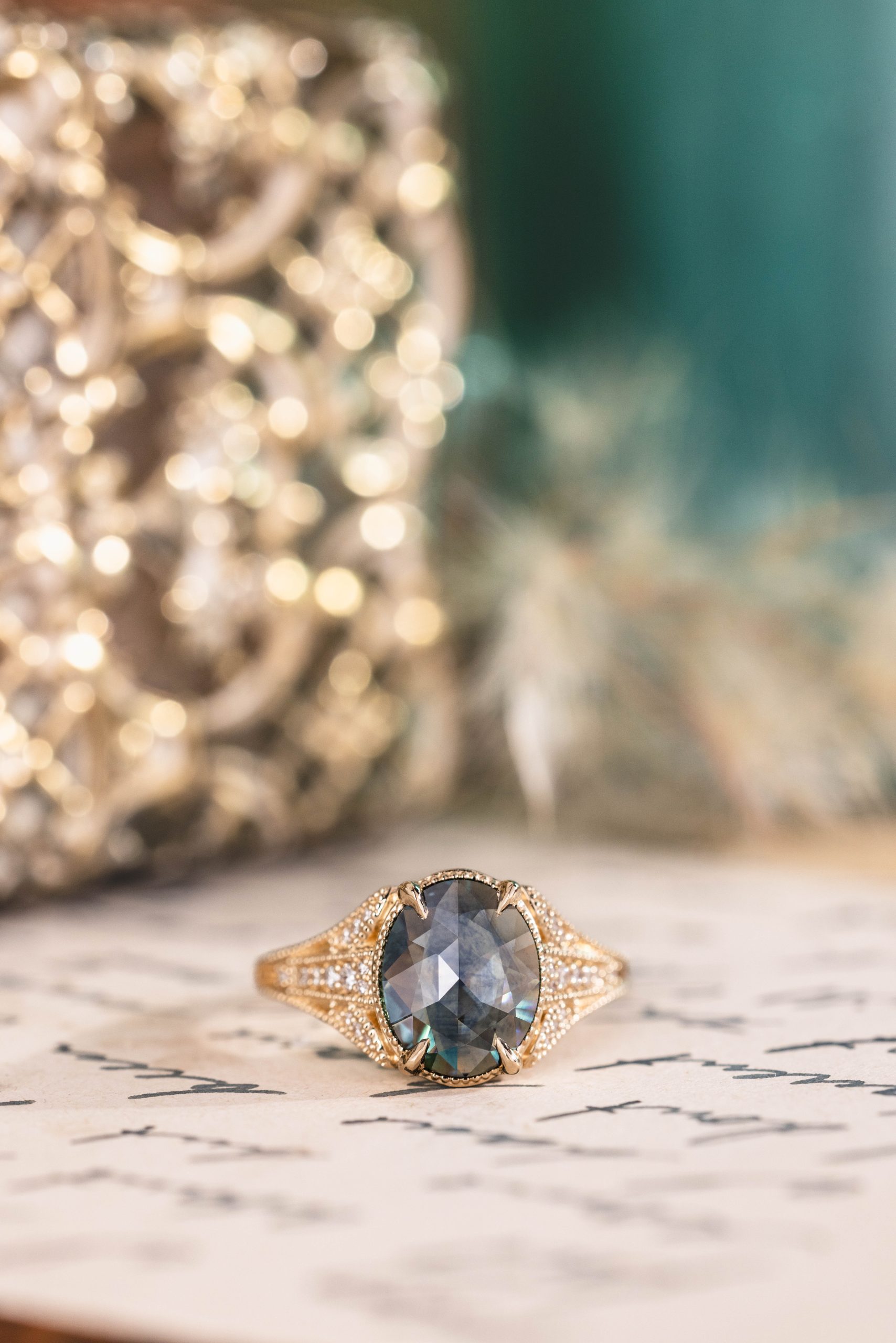
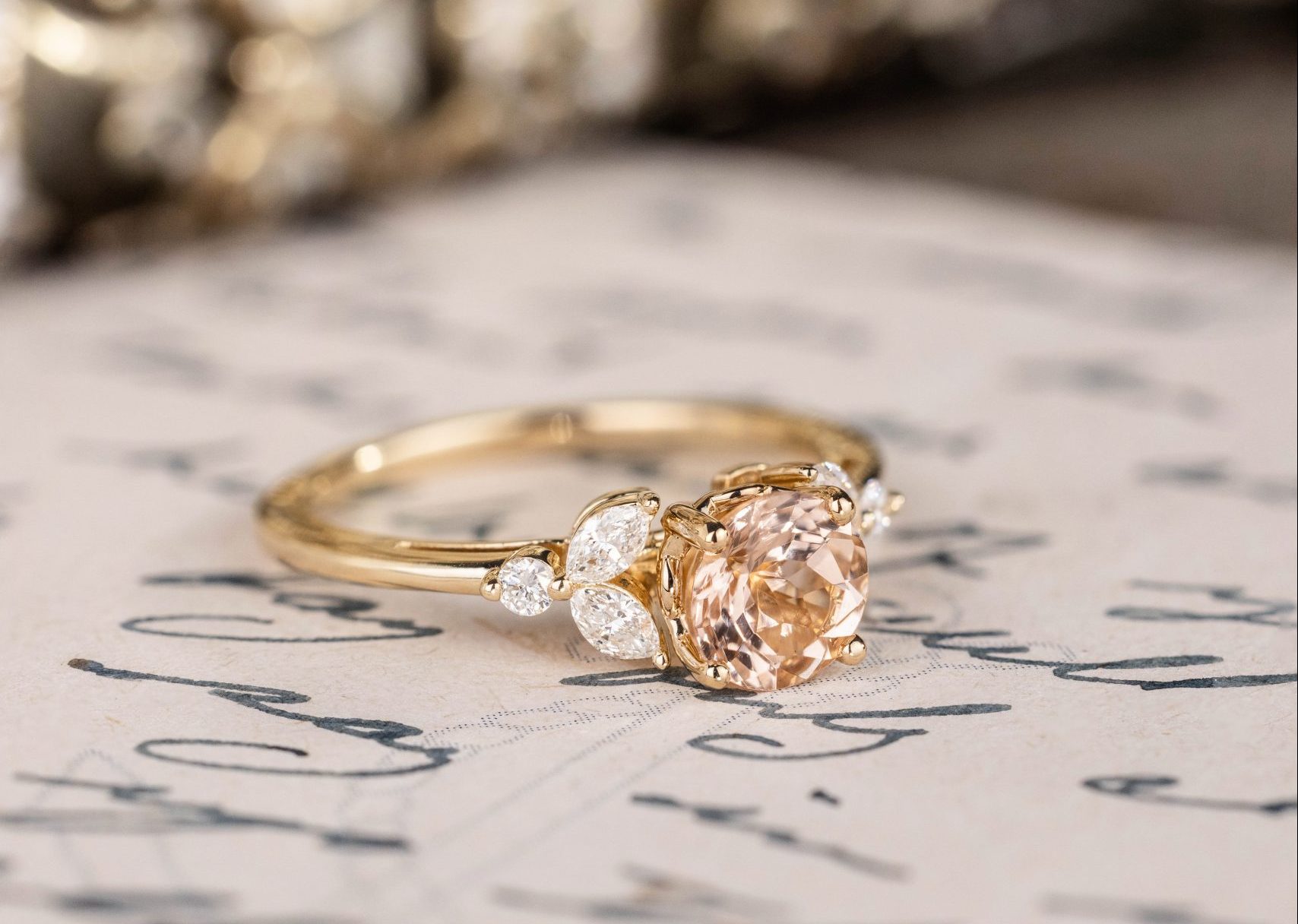
The next big influence for 2026 is the return of the 1970s. This is evident in the uptick of women choosing warm tones and earthy neutral stones, such as peach- and champagne-colored gems. Both men and women aren’t simply copying trends; they’re using them as inspiration and mixing design elements with antique diamond cuts (thanks, Taylor Swift) and vintage-cut gemstones.
All of these styles lend themselves to what we call modern heirloom design—pieces that feel timeless and deeply personal.
How have customer preferences shifted in recent years, and how are those shifts influencing design choices going into 2026?
Many people are now aware of the famous De Beers campaign and understand that the idea of diamonds being the only true symbol of commitment and love was largely a marketing strategy. Because of this, we’re seeing more upcycling of family jewelry and an increased use of alternative gemstones in rings.
Dainty bands such as pavé (tiny diamonds set closely in a row) are being overlooked in favor of thicker, bolder bands. There is also a strong preference for lab-grown diamonds, which are less expensive than natural mined diamonds and allow couples to choose larger stones—often two carats or more—for engagement rings.
Customization is king. The last statistic I heard was that 90 percent of brides will customize their ring.
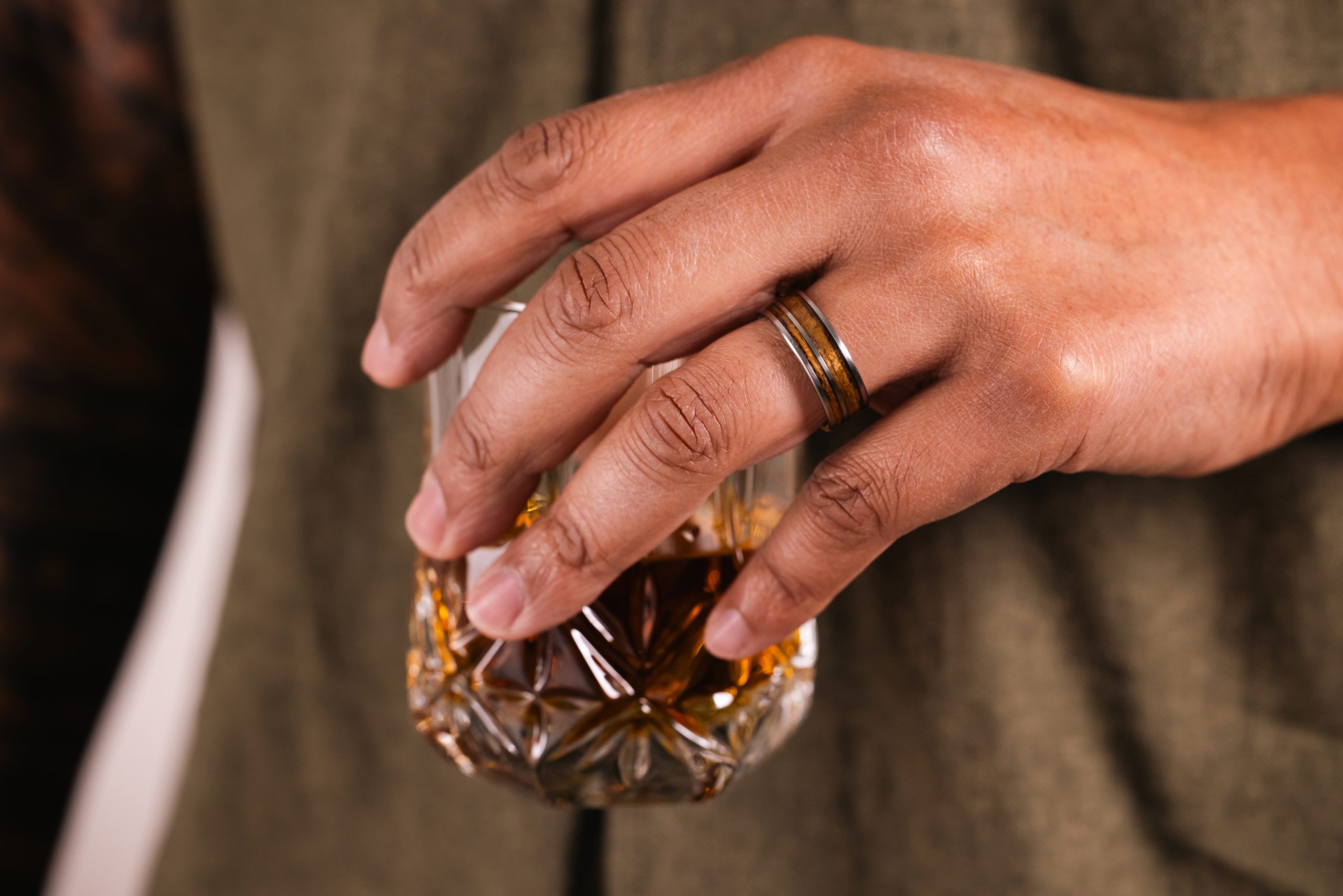
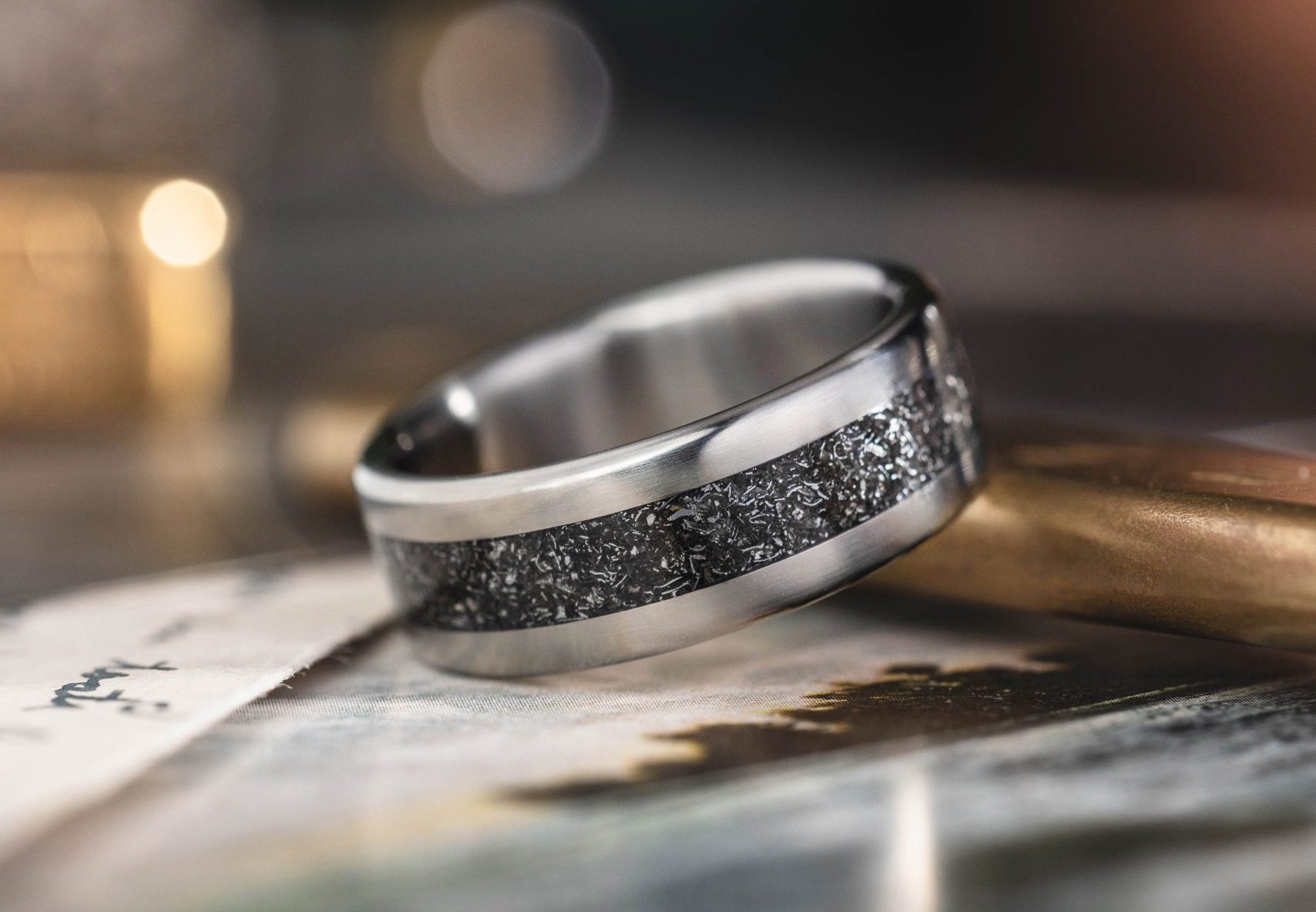
Men are inquiring more about beveled-edge options for both solid and inlaid rings. Many are still choosing combinations such as elk antler, meteorite dust, turquoise, or even teak wood from the USS New Jersey battleship. Some also supply their own materials for inlays. Right now, yellow gold is hot, though fashion magazines suggest white gold may be making a comeback.
What design elements—materials, finishes, stone shapes, or band styles—are expected to stand out next year?
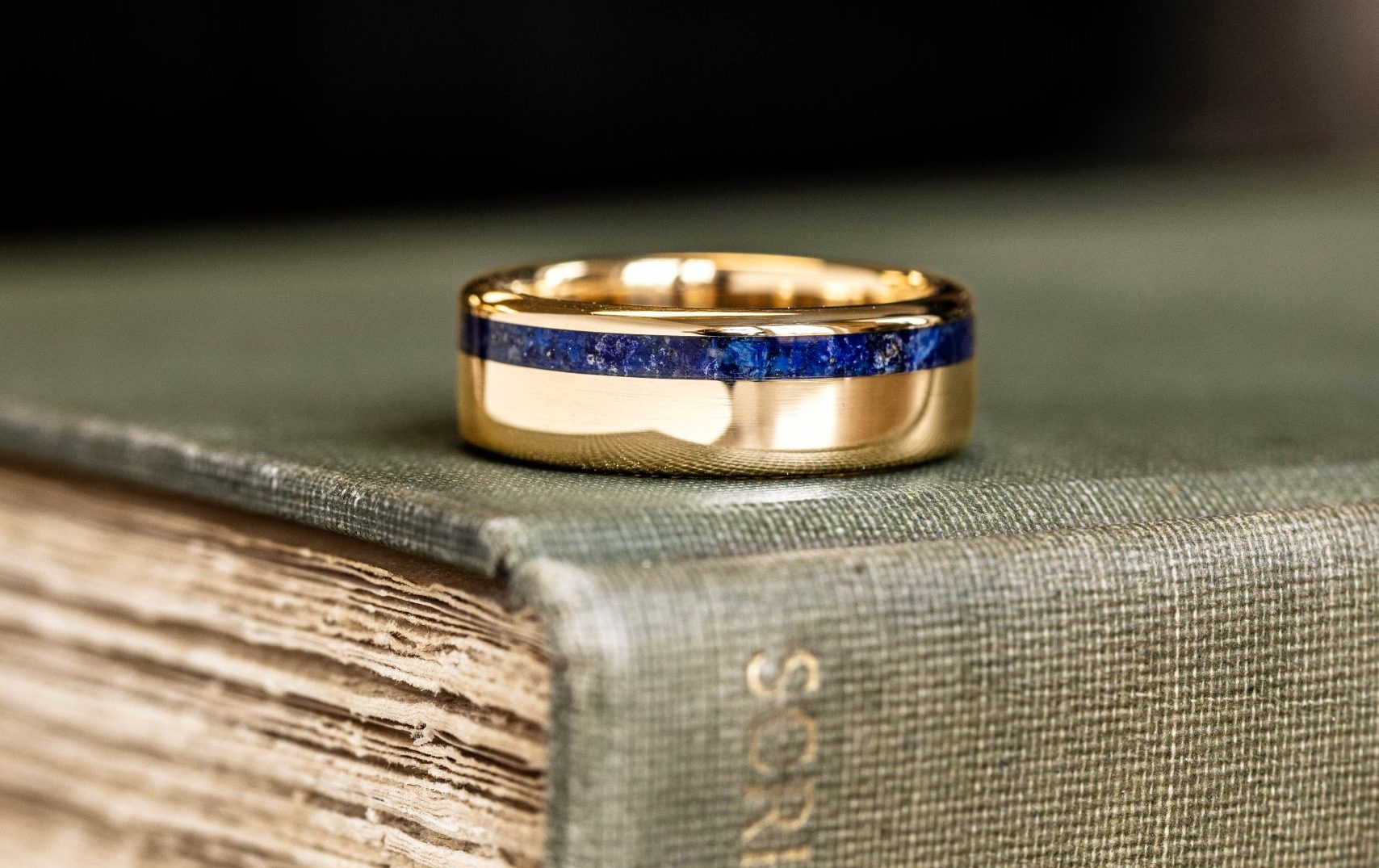
Men are increasingly asking for lapis lazuli inlays in their bands—another nod to 1970s design. Lapis has a bold, electric blue color that pairs beautifully with yellow gold and diamonds.
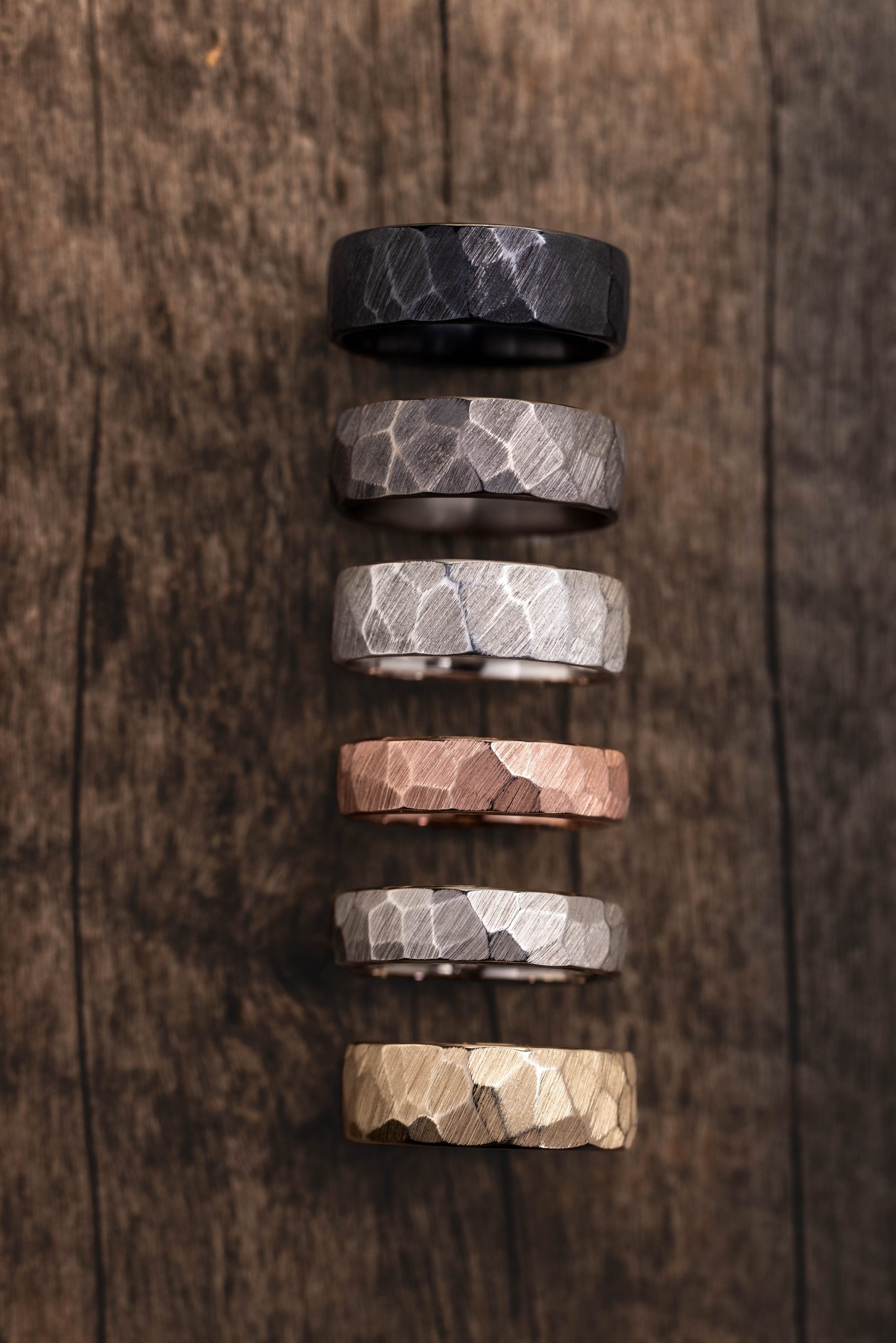
In terms of texture, men are gravitating toward matte, satin, and brushed finishes. Our most popular seller is the Apollo version, which features a hammered finish and is available in gold, silver, or titanium.
Women consistently gravitate toward blue stones, such as deeply colored, almost navy-blue sapphires; the inky blue of London blue topaz; or the sea-water blue of aquamarine. They are also drawn to natural design elements, including side stones arranged like flower petals and gold accents that resemble branches or vines.
How is personalization influencing ring design, and what types of custom details are couples requesting most?
We specialize in custom and unique designs. Women often request hidden halos, cathedral settings, and scrollwork. Many are mixing white, rose, and yellow gold within their engagement rings or wedding sets.
Men frequently incorporate sentimental materials into their inlaid rings. Many couples choose to create wedding bands with the same inlay—such as turquoise or abalone—so their stories are connected through the bands, while the engagement ring remains uniquely hers.
A hidden halo is an engagement ring design featuring a ring of small diamonds or gemstones set beneath the center stone, replacing the traditional halo that surrounds the stone’s edge. Cathedral settings resemble the arches of a cathedral, holding up the center stone.
Men’s wedding bands continue to evolve—what styles, materials, or features are defining this category now?
We see two types of men. Some prioritize simplicity and durability over self-expression or uniqueness. That said, simplicity doesn’t mean the same kind of band Dad or Pop-Pop wore in the 1980s. Gone are the simple domed gold rings of the past—today’s minimalist bands often feature hammered finishes or specialized engraving.
Then there’s the man who wants three different inlays in his wedding band. He wants to tell his story—almost like a mini self-portrait. We’ve included materials such as pieces of a basketball court, parts of a favorite car, and even computer chips in custom men’s rings.
Are you seeing differences in trends or priorities across generations, particularly between Millennials and Gen Z?
For men celebrating anniversaries or entering second marriages, we often see a desire for matching rings with their bride that symbolizes the relationship. Gen Z and Millennials, on the other hand, are deeply invested in customization—creating rings that reflect their personal interests and identities.
Younger couples are also more financially conscious. Many are focused on buying a house and are less interested in spending what would amount to a down payment on an engagement ring.
How important is sustainability, ethical sourcing, and alternative materials or stones in today’s purchasing decisions?
Most people have heard of the concept of a “blood diamond,” which has significantly contributed to the popularity of lab-grown diamonds. Sustainability and ethical sourcing are very important, and customers are increasingly value-oriented—using recycled materials or heirloom pieces whenever possible. They want proof of where their items come from so we do include authenticity cards with most of our materials.
This makes it essential to work with reputable dealers who follow industry standards for ethical sourcing. We’ve heard several stories of couples purchasing rings from Etsy and later discovering they had no idea where the materials came from.
What role does digital shopping and social media play in shaping customer expectations and trend awareness?
Social media and influencers drive website traffic and reinforce style trends. Customers often view posts as social proof that validates trends, unique styles, and celebrity choices.
Digital shopping and social media have made customers more trend-aware, design-savvy, and customization-focused. Future brides frequently come in with specific Pinterest and Instagram inspiration, expecting unique, made-to-order rings and a luxury buying experience—even online.
If you had to describe the overall ring aesthetic for 2026 in just a few words, what would it be—and why?
Modern heirloom — uniquely curated rings, designed just for them.
As this year’s trends make clear, rings in 2026 aren’t about following a single look. They’re about creating something personal, intentional, and lasting. For those ready to turn inspiration into a one-of-a-kind piece, schedule a design consultation with Rustic & Main and create a ring as personal as the commitment it represents.