
Setting out, we didn’t know exactly what to expect from the NC Black Heritage Tour in Eastern North Carolina. Driving the roads, we quickly realized how easy it can be to miss the places where greatness still lingers. This trail connects more than thirty sites across nine counties, each one preserving the legacy of African Americans who built, taught, led, and protected their communities in the face of impossible odds.
These are places of resilience and progress, but also of quiet power. They remind us that history isn’t always made in the spotlight. Sometimes it happens in small classrooms, on wind-beaten shorelines, or inside churches that once served as gathering places for freedom and faith. The NC Black Heritage Tour deserves more attention, not just as a record of the past, but as a living map of courage that shaped North Carolina then and now.
Williamston: A Voice for Change
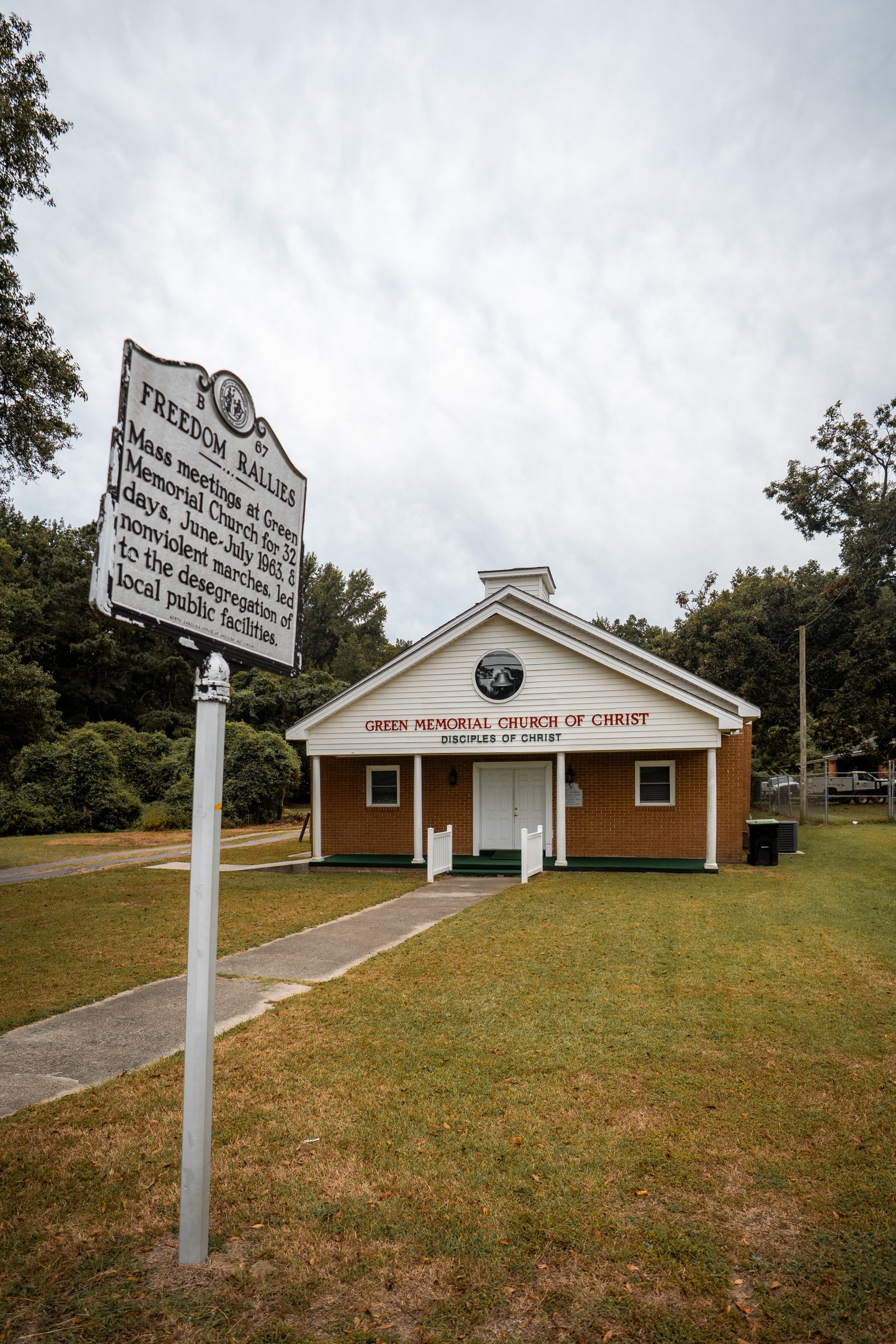
We started in Williamston, where the Green Memorial Church of Christ still stands quietly along the street. Standing out front, it was easy to imagine the energy that once filled this place. During the civil rights era, this was a meeting ground, a place for Freedom Rallies and planning sessions that carried more weight than the building itself could hold. Faith met action here, and that combination gave people strength when little else did.
Edenton: Enterprise and Escape
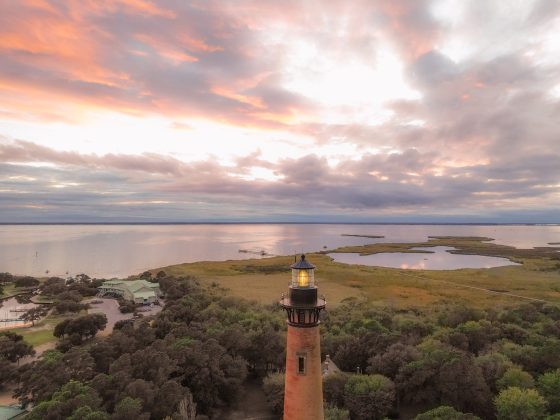
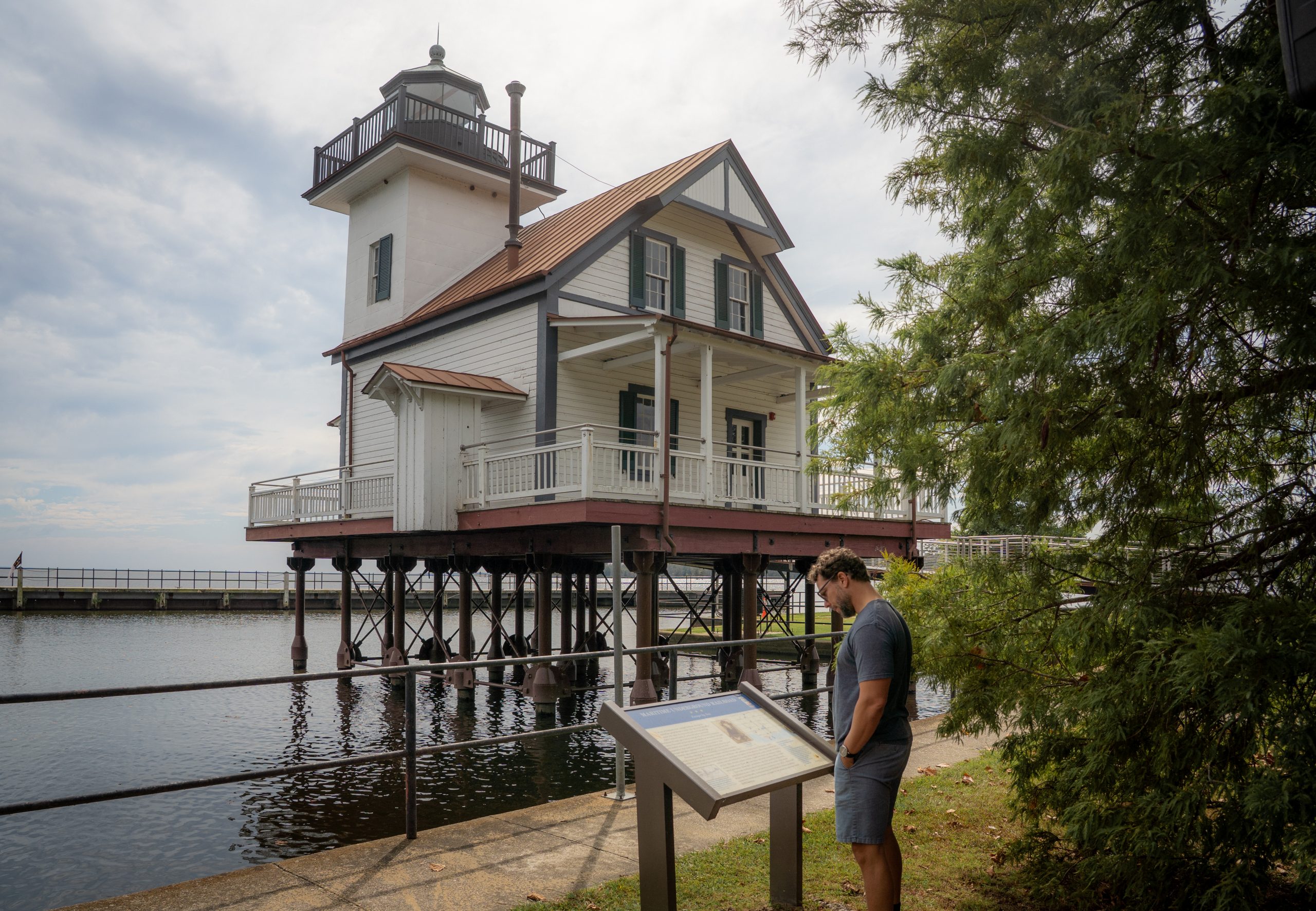
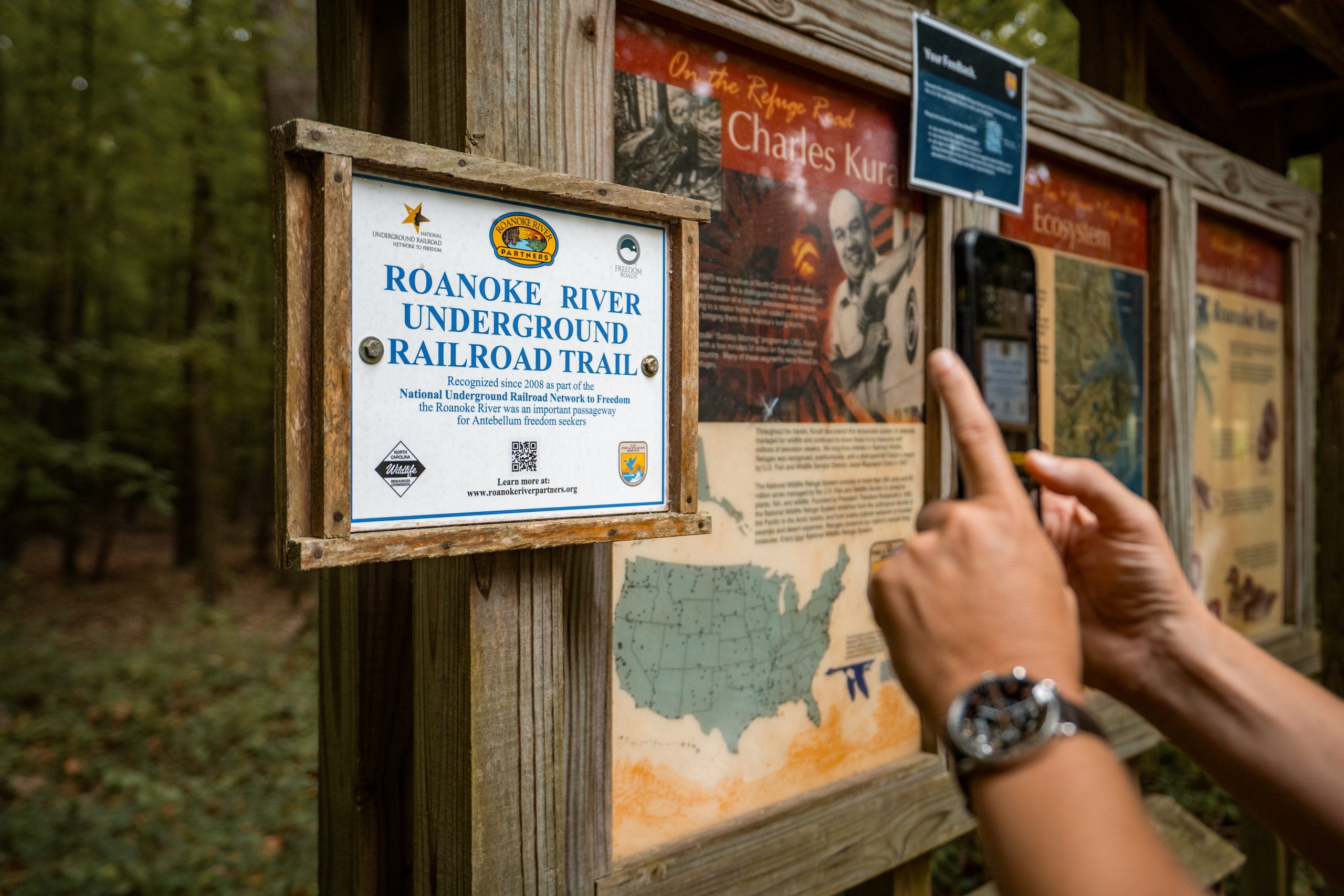
Edenton may look like a quiet coastal town, but its history runs deep. From business leaders to freedom seekers, some of North Carolina’s most defining stories began right here. Near the historic Roanoke River lighthouse, we found the start of the Maritime Underground Railroad Trail, a path that tells how freedom seekers once escaped by sea. Standing by the water, looking out toward the Albemarle Sound, one can imagine small boats pushing off under the cover of night, the splash of oars and the steady wind carrying them toward an uncertain but hopeful future.
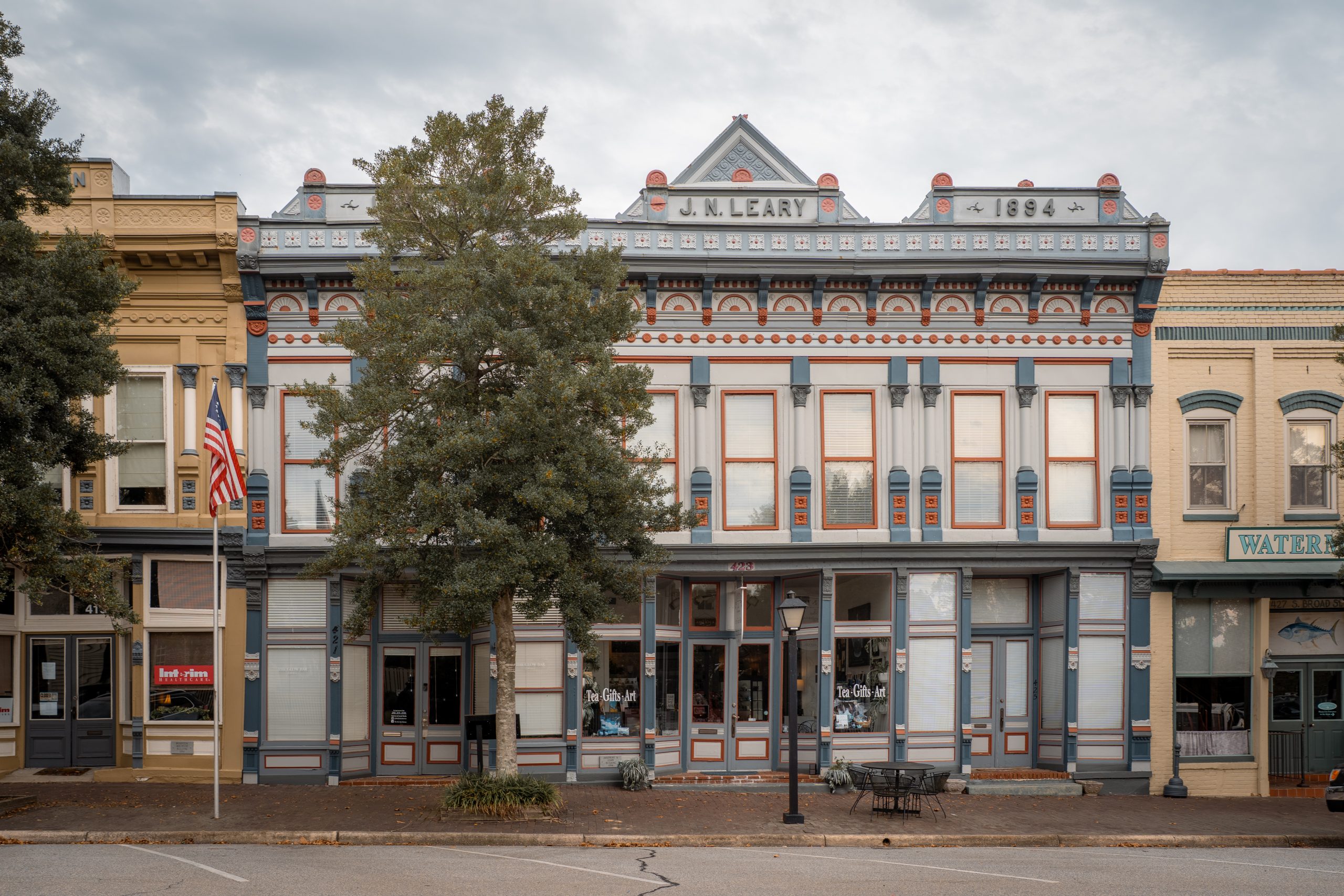
Downtown, we stopped at the Josephine Napoleon Leary Building. Leary was born into slavery and went on to build a real estate business that left its mark on the town. Her beautiful building, still standing more than a century later, is a reminder that success and ownership weren’t just dreams; they were acts of determination.
Nearby in Hertford, we visited the site honoring Beulah and Lillie Burke, sisters and educators who helped found the first Greek-letter sorority for African American collegiate women in 1908. Their story felt both distant and familiar, proof that progress often begins in classrooms and conversations, and that education itself was a form of resistance.
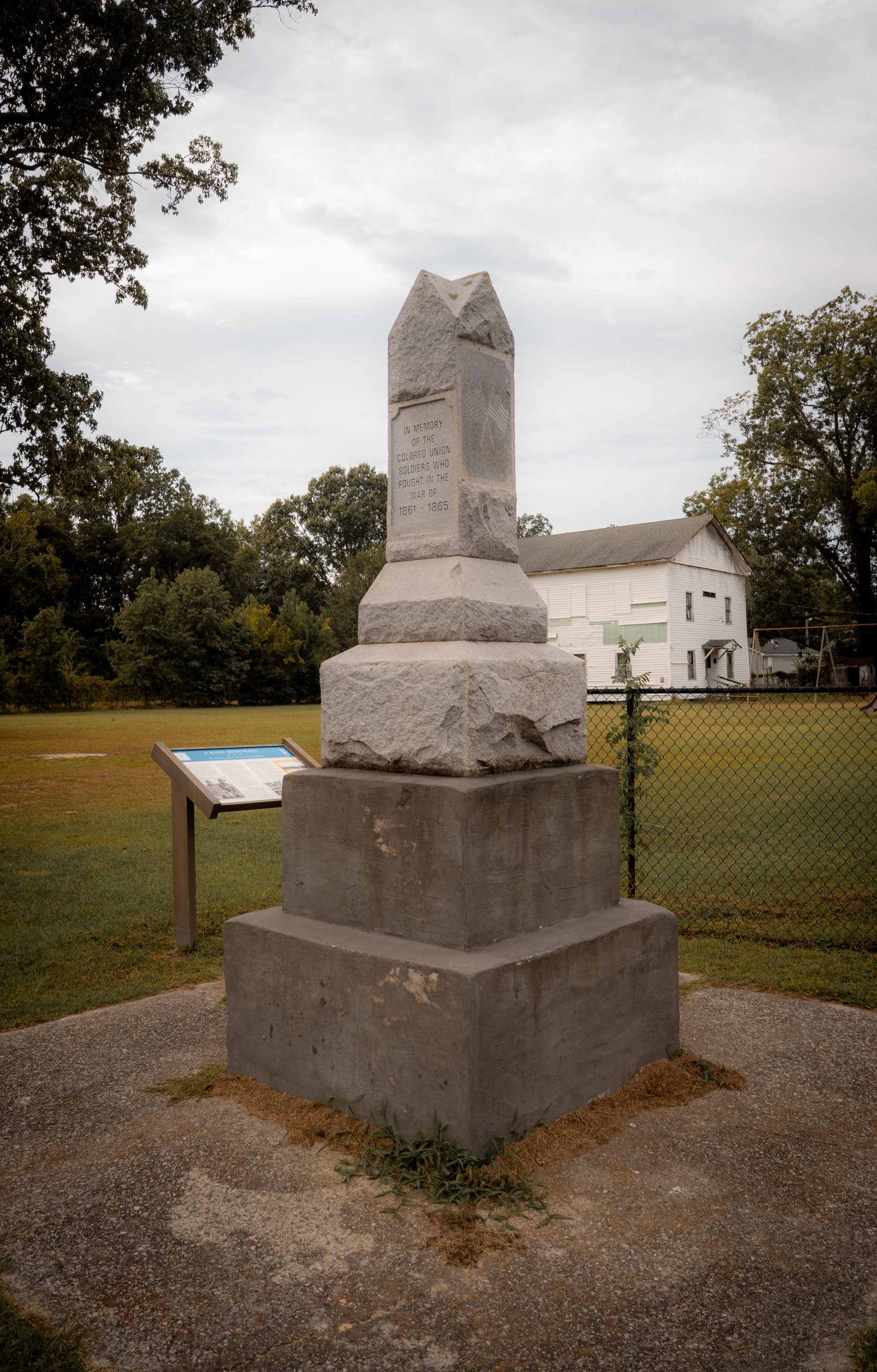
Before leaving town, we spent time at the Colored Union Soldiers Statue. It’s one thing to read about the men who fought for freedom; it’s another to stand where they stood. Their courage is hard to describe, serving a country that didn’t yet see them as equals but fighting for it anyway.
Elizabeth City: Building and Leading
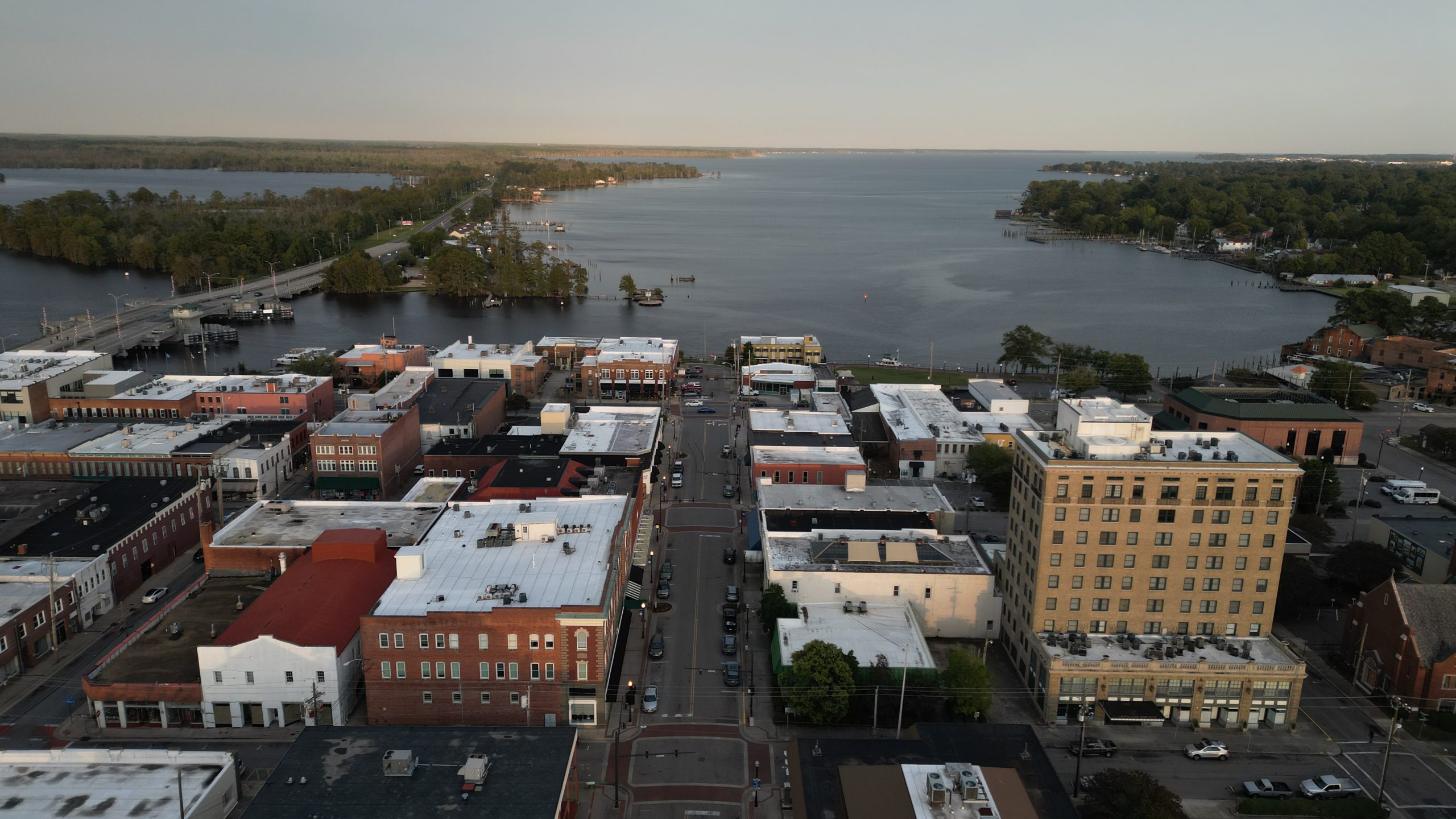
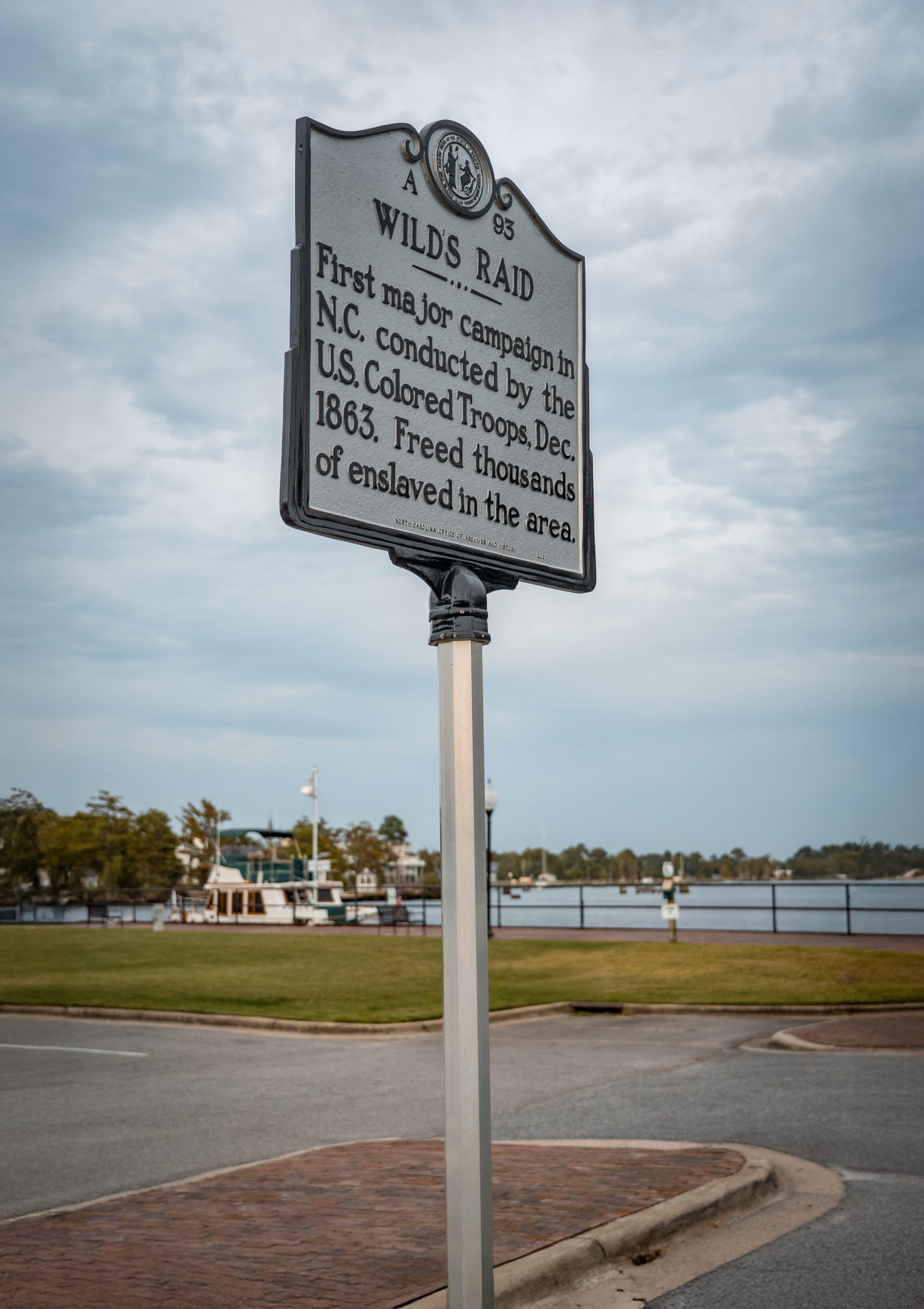
Elizabeth City brought the weight of war and progress together in one place. The Wild’s Raid monument tells the story of a campaign led by U.S. Colored Troops in 1863, one that freed thousands across the region. We read the marker and imagined the noise, the fear, and the sudden realization of freedom. It must have felt like the world was changing and standing still at the same time.
A short drive away, the A Town Divided marker tells a harder truth. When Union troops arrived, neighbors found themselves on opposite sides of the same cause. The tension that tore through Elizabeth City then still echoes faintly now, proof that progress rarely comes without a cost.
Downtown, the Citizen Bank Building stands tall among newer storefronts. It was the first Black-owned bank in eastern North Carolina, and it gave families access to credit and independence in a time when both were rare. Standing in front of it, we thought about what it meant to walk into that building then, to finally have access to opportunities that others took for granted.
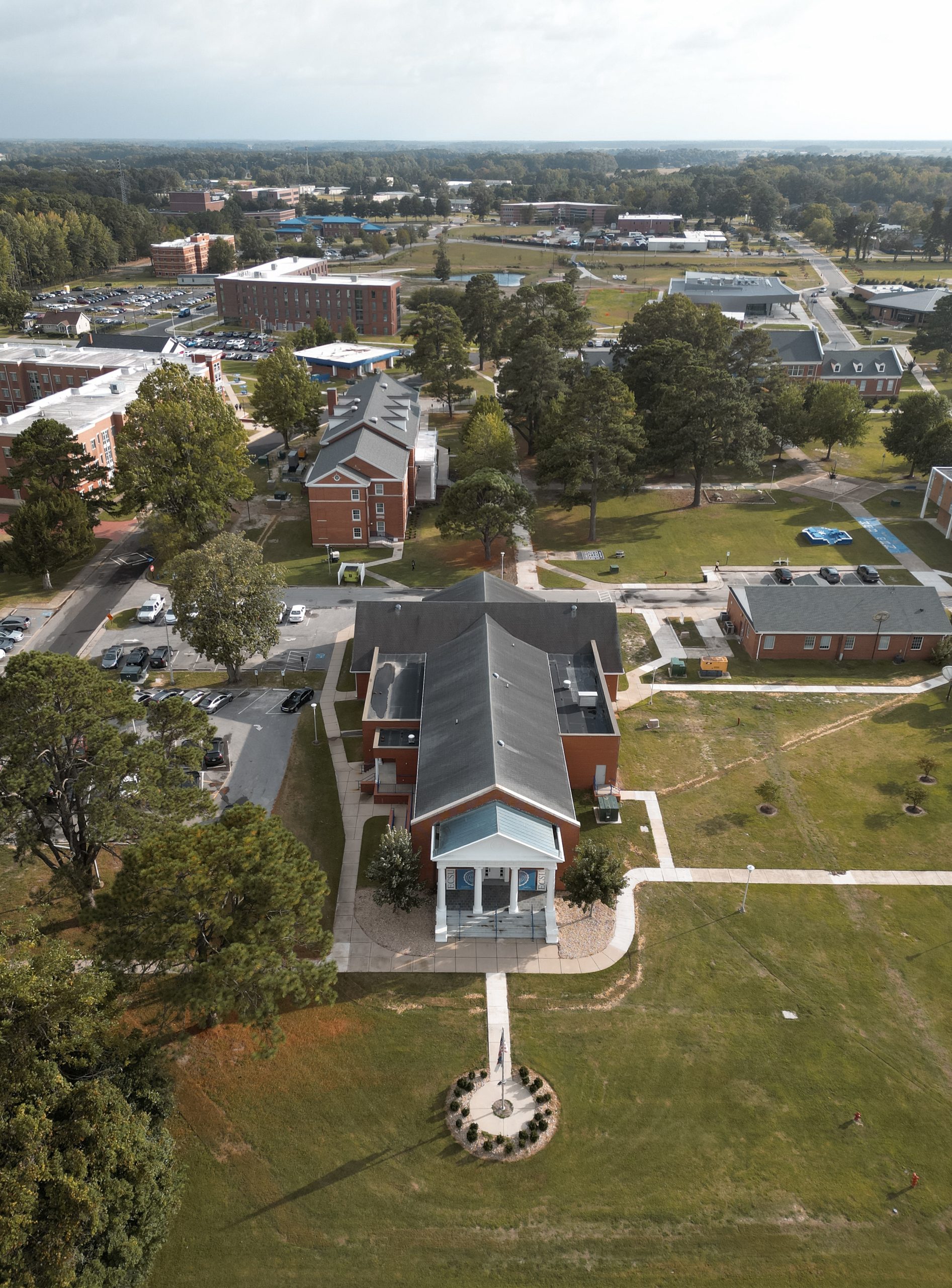
At Elizabeth City State University, founded in 1891, that same spirit of progress lives on. Originally created to train black teachers, ECSU has since become a cornerstone of higher education and leadership in the region. Its history stands as a reminder that education has always been one of the most powerful tools for change.
Currituck Mainland: Learning, Teaching, and Remembering
Heading toward Currituck, the trail led us through open farmland and quiet crossroads towns where education was the heart of community life. The Currituck Union School and McBride Colored School tell similar stories. These small, often underfunded schools were proof of determination, run by teachers who understood that education was the surest path to freedom. The buildings are different now, but they still represent the strength of communities that refused to give up on learning.
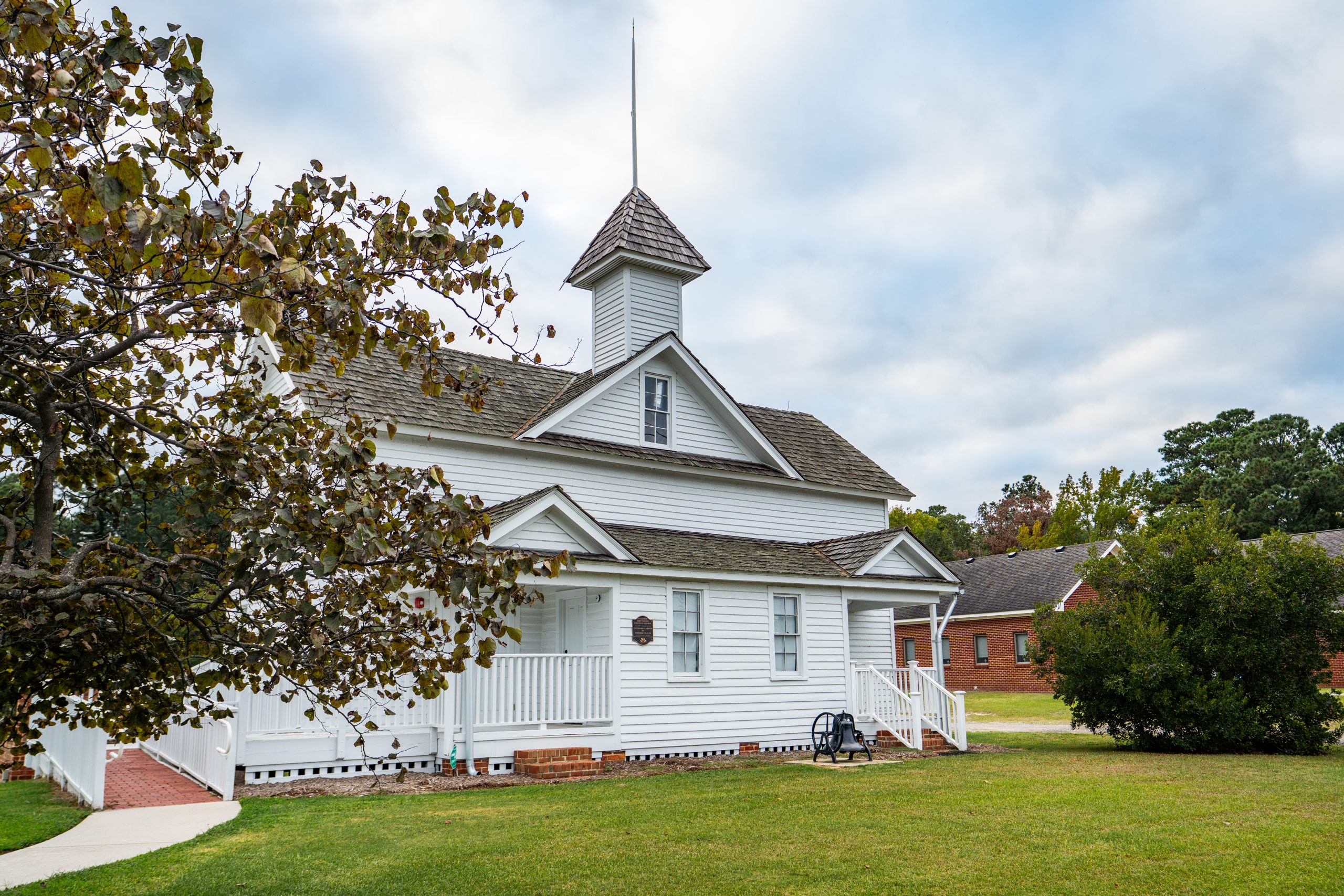
The Jarvisburg Colored School was one of the most moving stops. Built in 1868 on land donated by William Hunt Sr., it served as both a school and a symbol of hope for generations of students. Inside, the restored classrooms still carry a certain weight, the desks, the chalkboards, the sense that what happened here mattered more than most will ever know.
Nearby, further inland in South Mills, the Pathway to Freedom at the Great Dismal Swamp felt different from anywhere else on the trail. The swamp once sheltered people escaping slavery, a harsh and dangerous refuge that demanded endurance just to survive. Archaeologists have uncovered signs of settlements deep within the trees, where families lived hidden and self-sufficient. Standing there surrounded by wind and dark swamp water, you can feel the dichotomy of fear and the freedom here.
Roanoke Island: Freedom and the Sea
Driving toward the coast, Roanoke Island was our next stop. We walked the Freedom Trail near the Elizabethan Gardens, tracing the path of the Freedmen’s Colony. From 1862 to 1867, more than 3,500 freed people lived here, building homes, churches, and schools from scratch. It was a community born from determination and hope, and though it was officially disbanded after just five years, many of those original freedom seekers stayed on Roanoke Island, staking a new life for themselves and the generations of their families to follow, calling the Outer Banks home to this day.
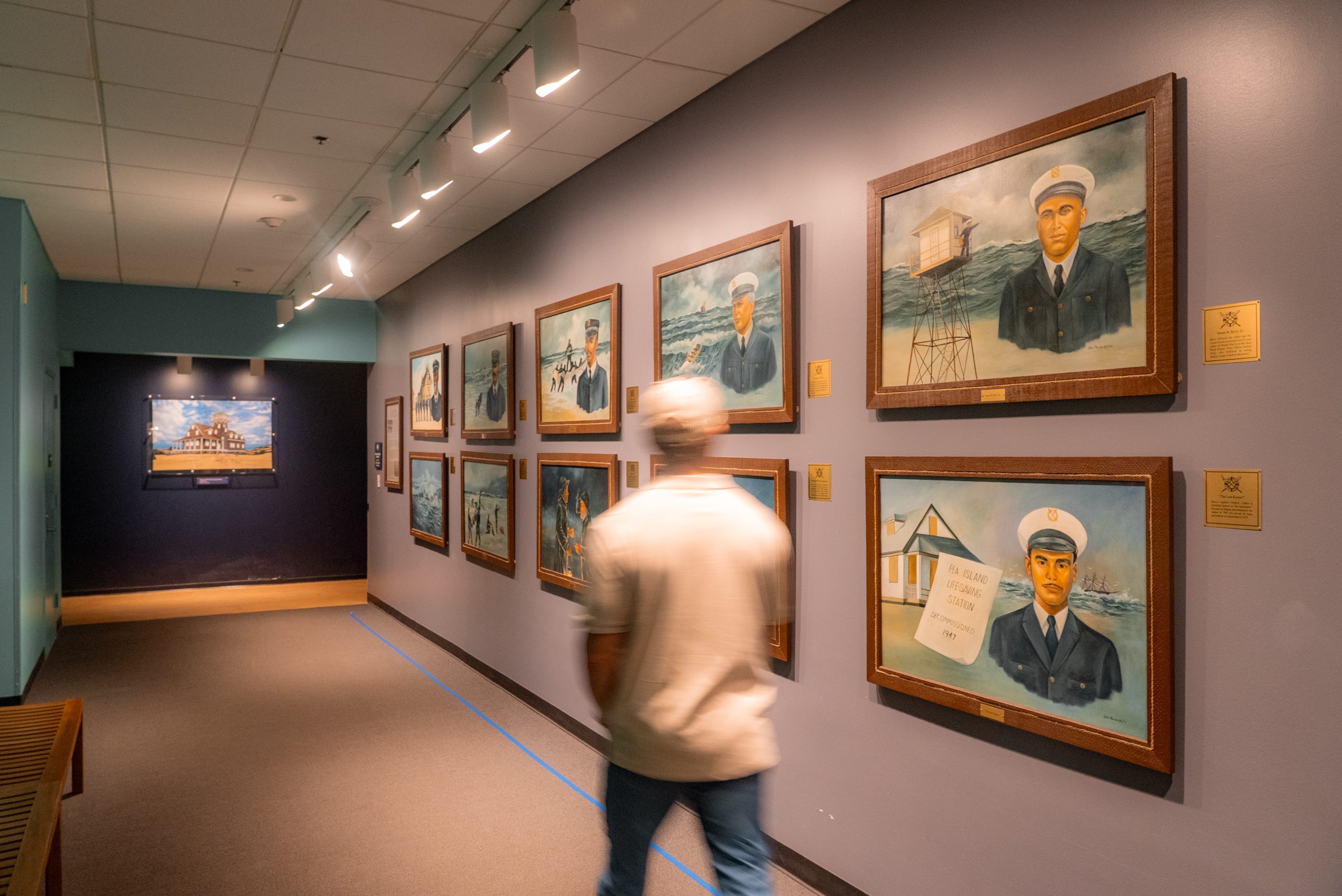
Roanoke Island is also home to the story of Richard Etheridge, the first African American Keeper of a U.S. Life-Saving Service station. At the Pea Island Life-Saving Station, Etheridge and his all-Black crew performed rescues that became legendary. In 1896, during the rescue of the E.S. Newman, they swam through hurricane conditions to save every soul aboard. They were denied recognition for decades, their heroism largely ignored until the Coast Guard finally awarded them the Gold Lifesaving Medal, a century late but no less deserved.
We stopped at the Herbert M. Collins Boathouse, named for Pea Island’s last keeper. Collins served from 1940 to 1947 and went on to spend more than three decades in the Coast Guard. Inside the boathouse, a weathered surfboat rests, the same kind of vessel these men once rowed into violent seas. It’s a simple space, but it speaks volumes.
Nearby, at the North Carolina Aquarium on Roanoke Island, we found James Melvin’s painting Freedmen, Surfmen, Heroes. It shows Richard and Patrick Etheridge, two lifesavers linked by courage and the sea. In 1896, Richard led his all-Black crew through a hurricane to rescue everyone aboard the E.S. Newman. Twelve years earlier, Patrick had helped save passengers from the Ephraim Williams off Hatteras Island. Patrick and his crew were honored with the Gold Lifesaving Medal in 1885. Richard and his men received the same award a century later. Seeing the two Etheridges together in Melvin’s painting felt like history finally setting things right.
Hatteras Island: The First Refuge
Further south, at the lowest point on the trail and at the very bottom of Hatteras Island near Pole Road, we visited the site of the Hotel De Afrique. During the Civil War, this became the first safe haven in North Carolina for African Americans who had escaped slavery and sought protection behind Union lines. The original structure is gone, but a plaque now marks the site. Standing there, with the ocean wind pushing across the sand, we thought about the families who arrived here, uncertain of what waited ahead but certain they could never go back. It was one of the trail’s quietest stops, yet it felt like one of its most important.
The Road Continues
Traveling the NC Black Heritage Tour changed the way we see this part of North Carolina. It reminded us that history isn’t abstract, it’s here, preserved in wood and brick, in the marsh grass and the schoolhouse walls, at the churches you pass by on your commute and the beaches you tan on. These places have been overlooked for far too long for what they really are, but their history and power is still here, asking us to slow down and listen.
The NC Black Heritage Tour isn’t just a route on a map. It’s a responsibility to visit, to learn, and to remember. The people who built, led, taught, and fought along this path didn’t do it to be remembered. But remembering them is how we continue their work.