
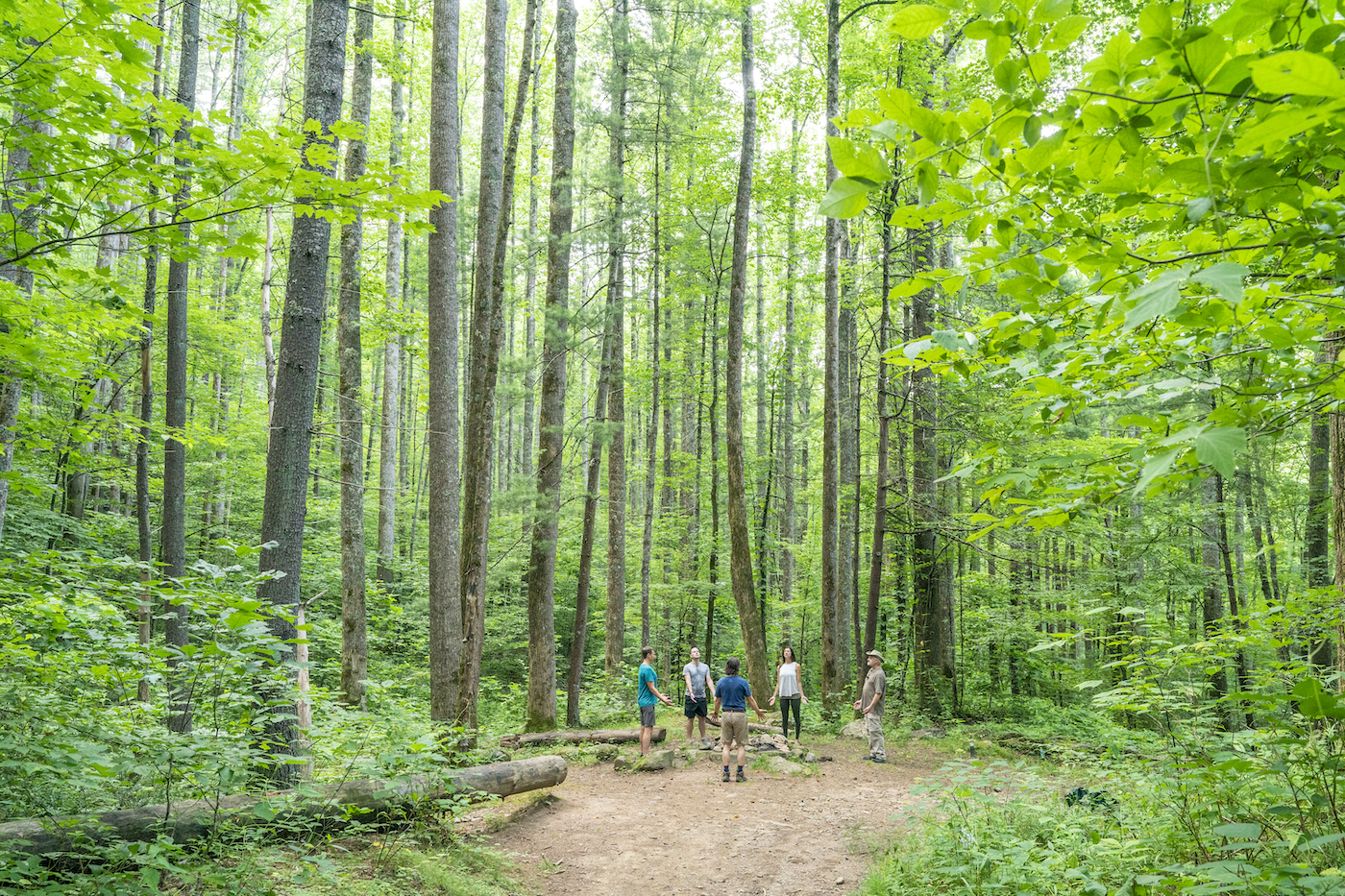

The damp, earthy scent of moss growing on a fallen log. Light shifting across a pine needle strewn patch of ground. The quiet rustle of leaves spun on their stems by a passing breeze. The snap of a twig under a heavy boot. Forests are a cornucopia of sensory delights.
Mark Ellison, founder of Pinnacle Forest Therapy in North Carolina, has made a career out of helping clients immerse themselves in the sensory bounty of nature, guiding them toward recognizing the restorative power of presence. “It is so important to connect people with nature and help them understand we are not separate from it, we are part of it,” he says, when reflecting on his mission.
Ellison is a North Carolina native who has been instrumental in bringing the practice of forest bathing from Japan to the United States. So much so, in fact, that Oprah Magazine featured Ellison and his work in a 2014 article on forest bathing and the practice’s myriad health benefits, such as lowering stress, strengthening the immune system, improving mental health, and increasing the ability to focus.
Here, Ellison tells us more about his practice, the benefits of forest therapy, and what, exactly, forest therapy actually is.
What exactly is forest therapy?
Shinrin-yoku, forest therapy, forest bathing…these all describe the Japanese practice of slowing down and experiencing nature through all your senses. Forest bathing is not hiking. When going on a hike we have a destination in mind. When forest bathing, we are at the destination, we are just going to get to know it in a deeper, more meaningful way.
What types of people have you worked with and who is this right for?
The beauty of forest bathing is that anyone can do it, anywhere. I have guided walks for secondary schools, college classes, retirement communities, land trusts, resorts, and private groups. I have guided people wanting to reduce stress and families wanting to remember a loved one who passed. And I have guided a walk to celebrate a new marriage and a walk around a wooded retirement and assisted living facility with participants using wheelchairs and walkers. I have guided hundreds and hundreds of people. There are so many stories.
Tell us about the different offerings.
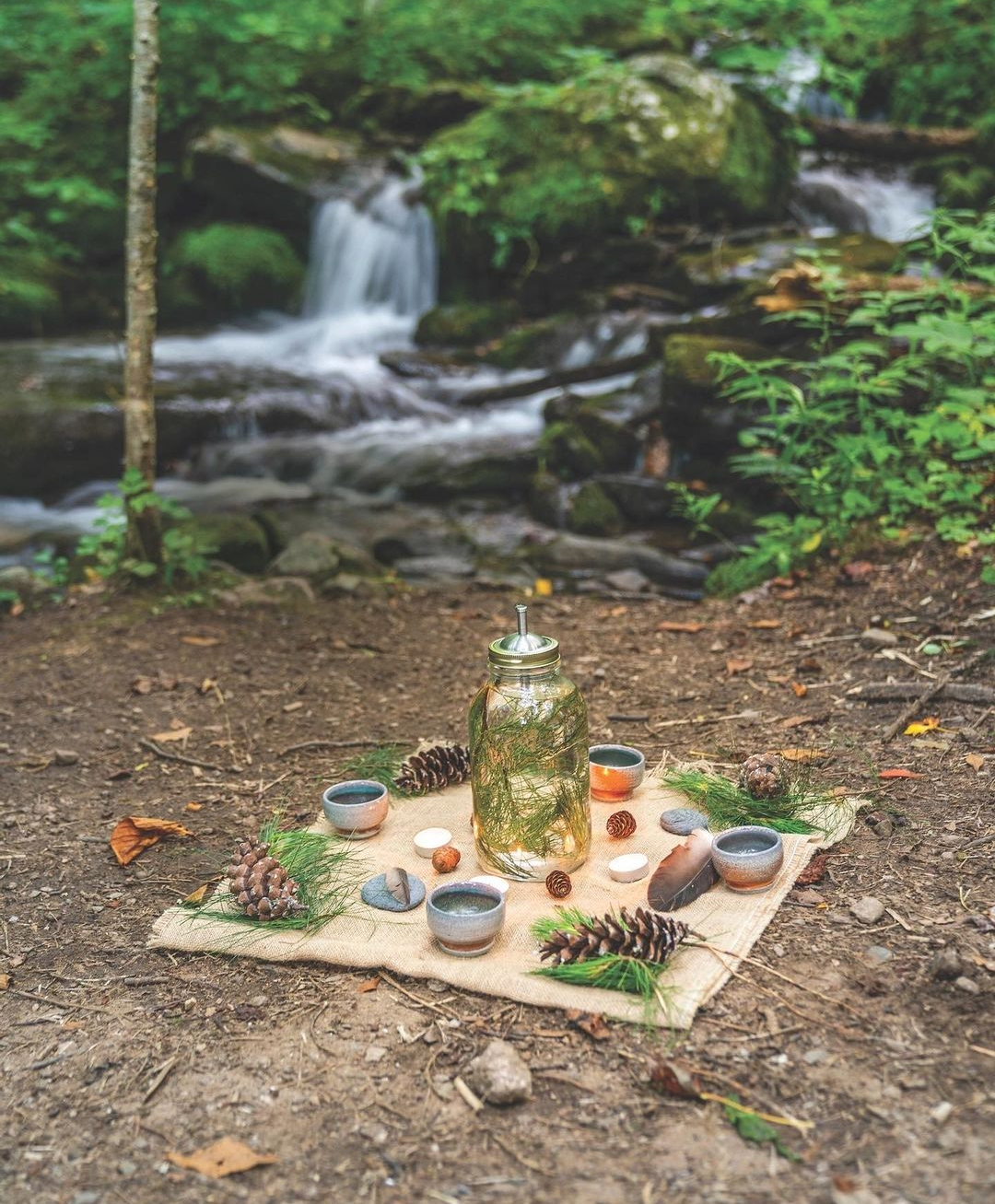
My walks are 2.5 hours and include a variety of opportunities to experience nature through all senses. There is an opportunity to find a place, perhaps a tree, where you can sit and just be. And I sprinkle quotes throughout that serve as inspiration for slowing down, connecting to nature, and living a purposeful life. I end with tea, usually a small branch of North Carolina Frazier fir or white pine steeped in warm water. Throughout, there is a focus on expressing gratitude for all that nature provides.
Why Pinnacle Park? What makes this area special to you?
I started hiking at Pinnacle Park, which is part of the iconic Plott Balsam Mountain Range, in the late 1990s, before it became a park or had marked trails. I know it well, and it knows me well. It is such a restorative, beautiful, and peaceful place. I partnered with the town of Sylva to create North Carolina’s first certified forest therapy trail here in 2022. The lower loop trail is wide, has a gentle grade, is cradled by two creeks, has open views of the sky, and feels miles from everything but is only 10 minutes from downtown. It is the perfect place for forest bathing and has become one of the best known forest therapy trails in the world.
What is the most rewarding part of what you do?
It is incredibly rewarding to help people connect with the peace, tranquility, and renewal that nature offers. Many people don’t know how to slow down, disconnect, and just enjoy being still; to let their mind rest. My walks are an extension of how I live my life. When people see there are healthier, more healing ways to live – to experience the deep peace that connecting with nature offers – that is what it is all about.