
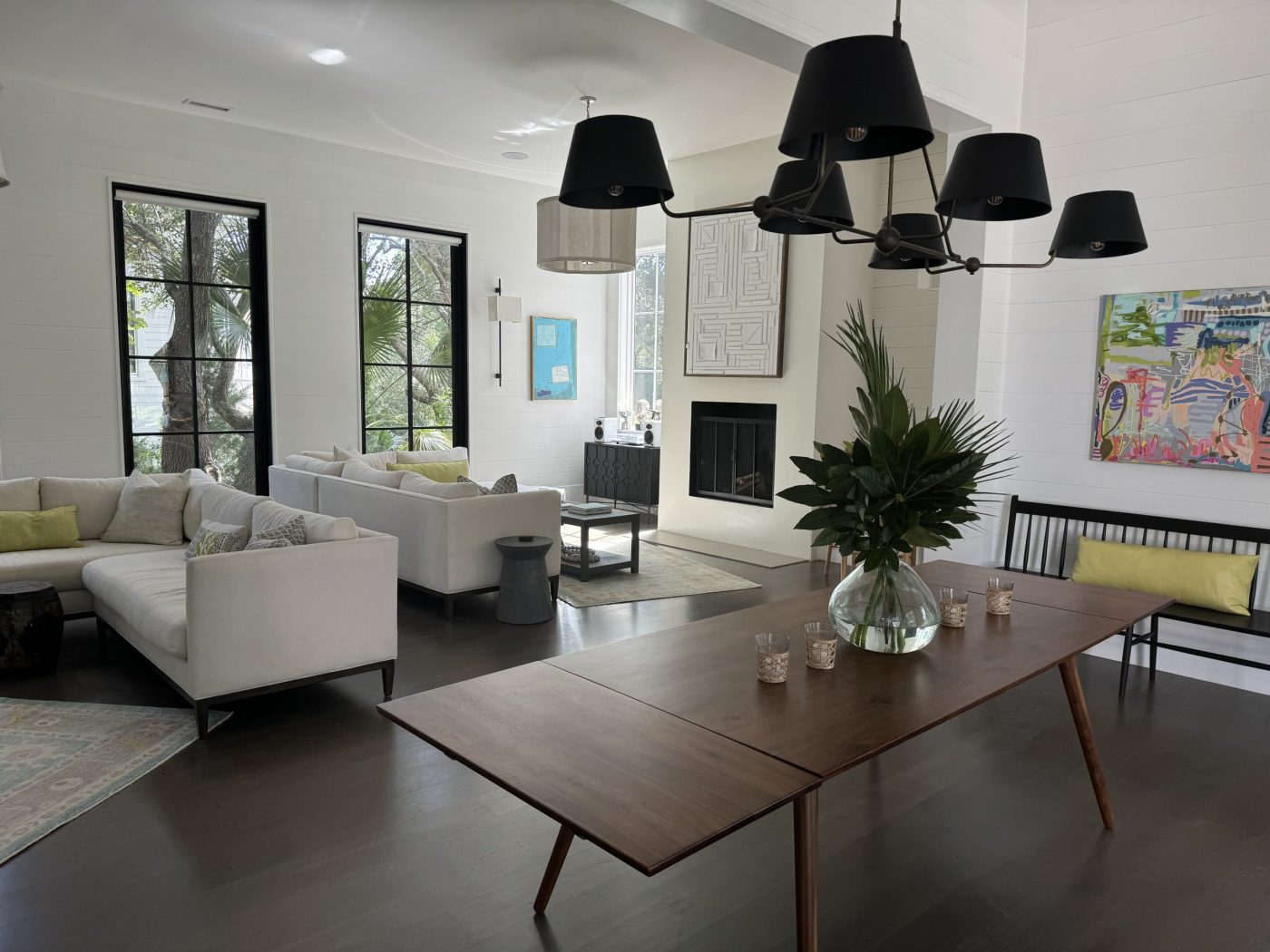
Everything, from the process of creating to the final display, is a study in partnership for artist Adele Dillon. Her career as a visual artist began after she renovated her beach house in Debordieu, South Carolina. The house’s newly modern architecture and expansive wall spaces beckoned to Dillon. She subsequently set out to create a work of Adele Dillon art that would add texture to the space, while also complementing the existing art.
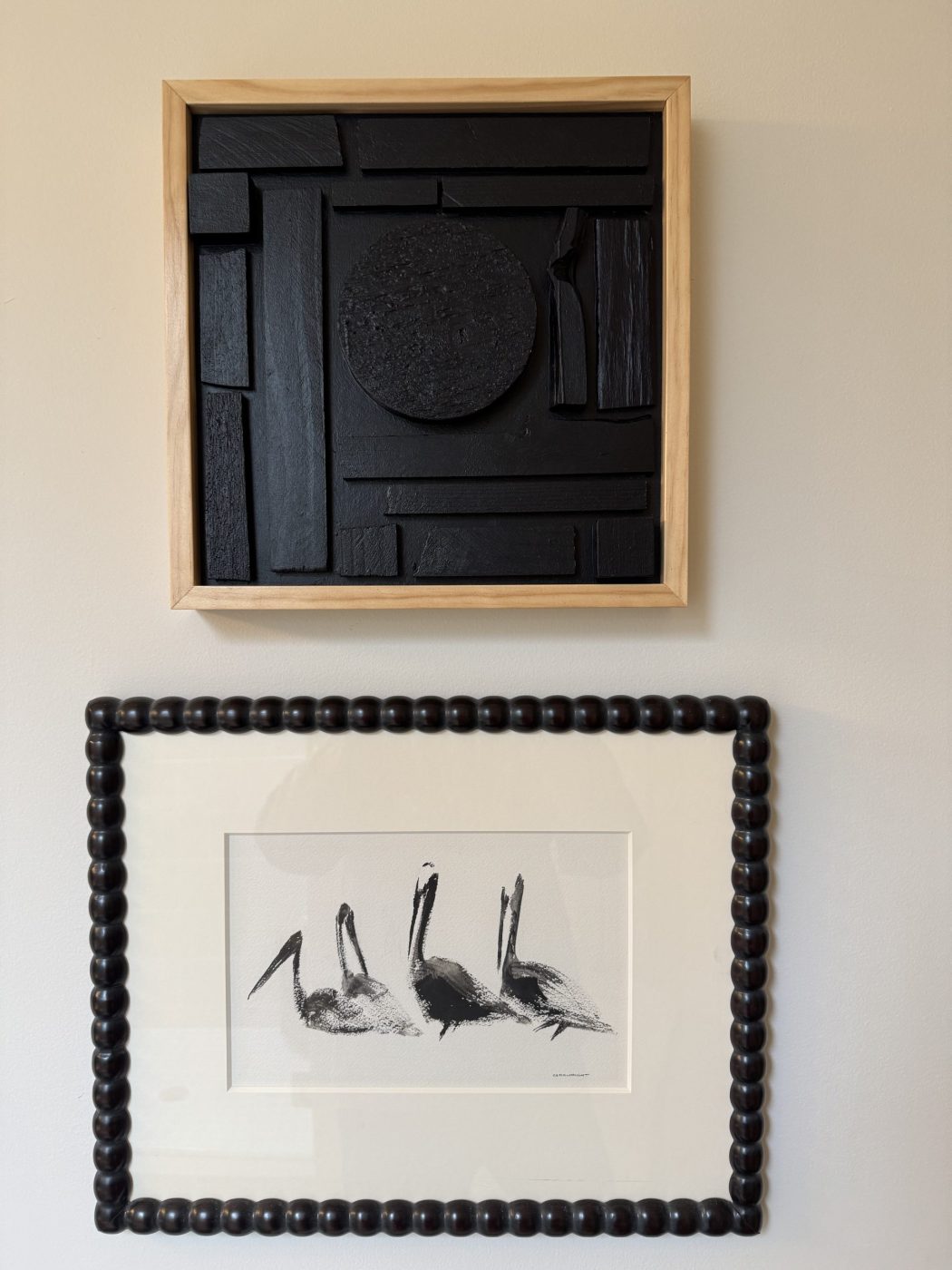
Adele raided the woodshop where her husband, Mark Dillon, channels his creative energy. She collected scraps, cut them into smaller pieces, and fashioned them in a design that achieved balance, harmony, and interest. Thus began a new passion and partnership. Mark creates the frames for her work, while Adele sweeps behind him in his woodshop, collecting cast offs like an orchid collecting better sunlight by growing along the branch of a tall tree.
“I think we both find working with our hands and creating something very relaxing. We’re never in a rush,” explains Adele. For Mark, that means creating everything from kitchen cabinets to the banjo he plays. Meanwhile, Adele has kept occupied by an array of endeavors – from a bakery to jewelry design. And now, of course, art.
“We often get the question ‘How long did it take you to make that piece.’ We can never answer this because we love every minute of the process. To us, that’s like being asked ‘How long did it take you to read your favorite book?’”
Flow and Mutuality in Adele Dillon’s Art
Her work, available at Anne Neilson Fine Art, has a serene atmospheric quality. This is perhaps unsurprising given the flow state she enters when she creates. Adele Dillon’s art uses soft, harmonious palettes – often combinations of muted blues and greens, warm creams and beiges, pale pinks or corals, and earthy neutrals. She applies color through broad, layered brushstrokes. The forms are minimal, while the composition feels balanced and organic.
Just as working with what’s already available is a core tenet of Adele’s creative process, so too is imagining the conversation between commissioned pieces and the spaces where they’ll live, much as she did with her very first piece. She thinks about how her art might add texture or dimension to a space, the way the colors might enhance or complete a room’s palette, and the conversation becomes one more facet of symbiosis at play in Adele’s process.
Now, having discovered this creative outlet, Adele sees only possibility ahead: “I feel like this is just the beginning.”
https://anneneilsonfineart.com/artist/adele-dillon