
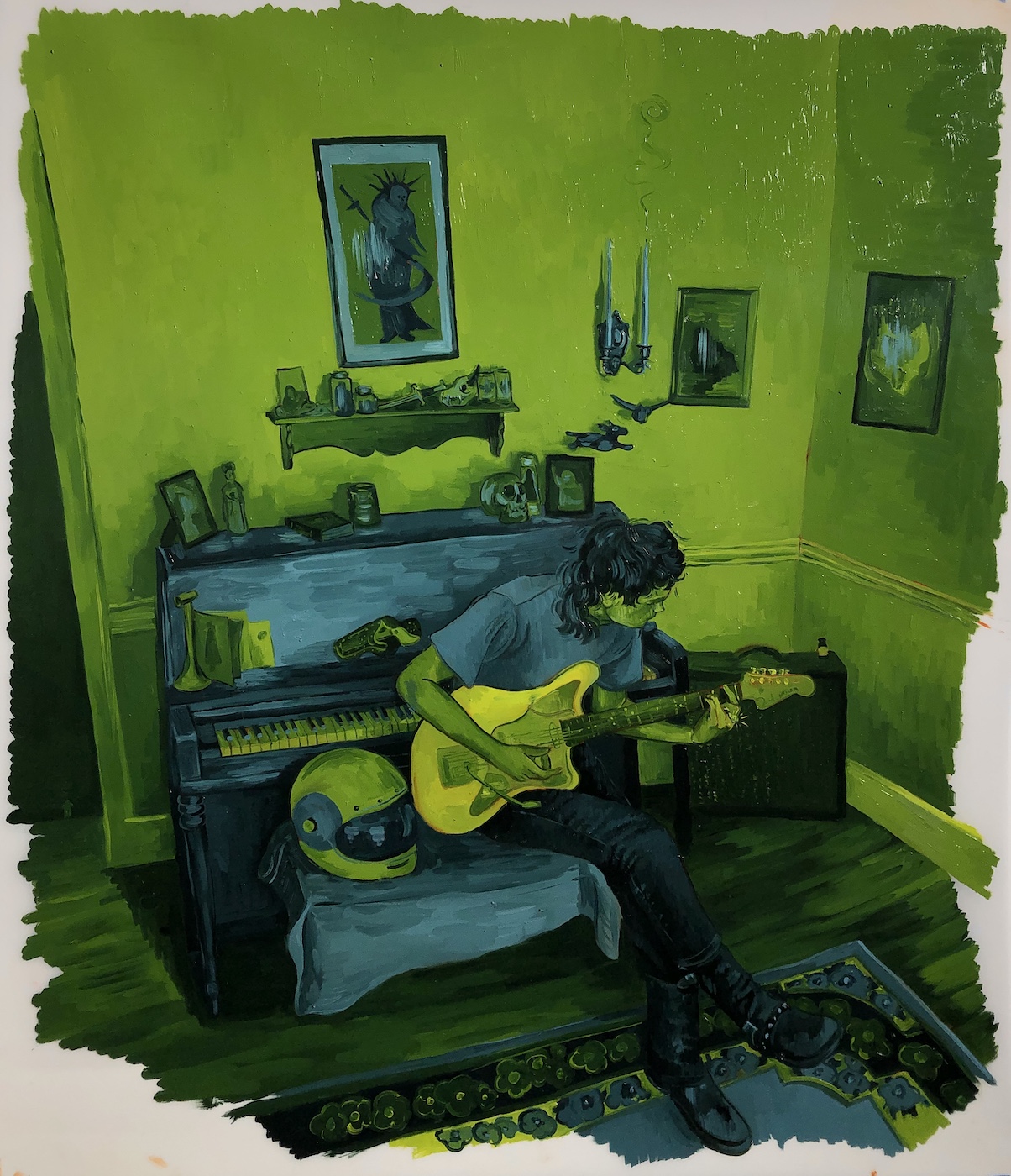
Quynh Vu’s art often explored her experiences as a first-generation Vietnamese-American, navigating the emotional and cultural intersections of these identities and histories. She unravelled the lingering trauma left by French colonialism in Vietnam. And Quynh Vu art interrogated the ways in which that trauma echoes through generations. As it does so, it repurposes and reclaims the visual language associated with Western imperialism in the process.
“My subject matter used to be quite loud and overt. It often came from a place of anger as I was trying to find language for identity,” says Vu. Ready to explore a different cache of emotions and prism of life, Vu shifted her focus.
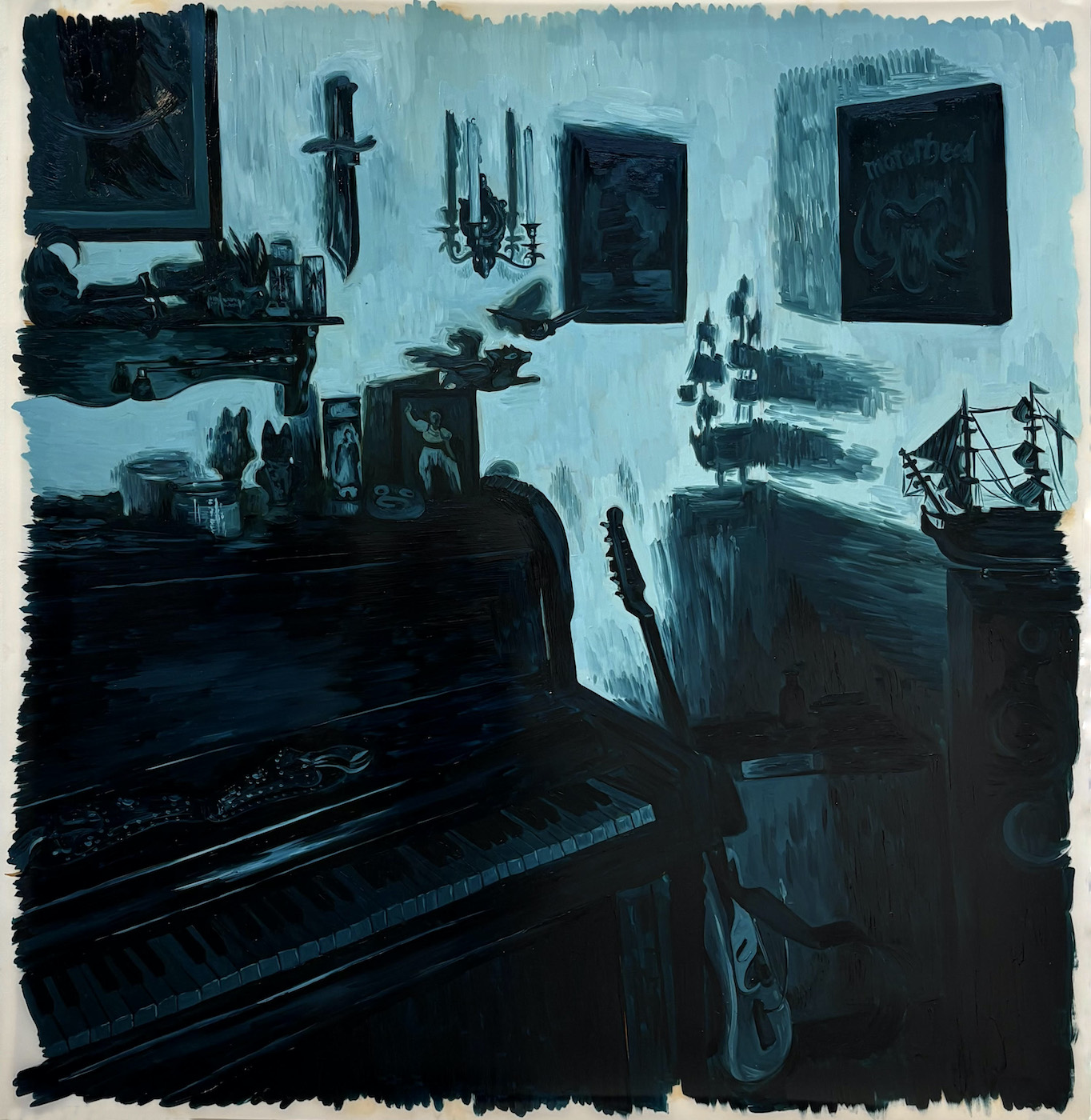
“I wanted to make work that a white person could make,” says Vu. For Vu, this primarily means rooting herself in control. That means control over her internal landscape (what would it be like to move through the world without “being tormented by identity?”). And it also means control over her time and company. She now paints moments that transpired because of plans or choices that she, specifically, made – moments that never would have happened had she not exerted her influence.
Quynh Vu Art Forces You In
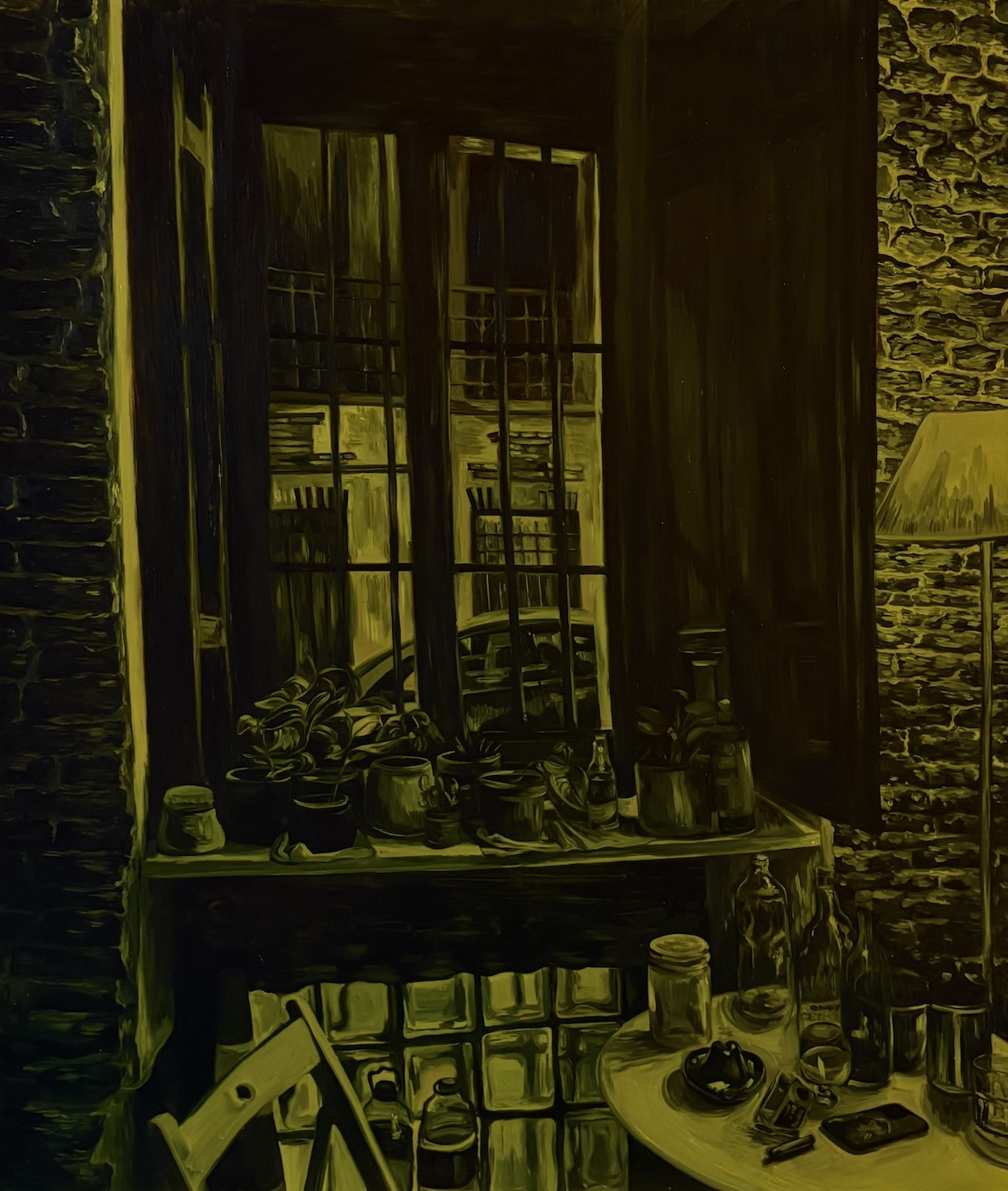
These moments are mundane and transpire in domestic or gathering spaces. Imagine a friend leaning against a dive bar window, keys in the car ignition, coffee sipped in the kitchen. By painting in monochromatics or dual-chromatics and preserving such low-action moments, Vu implies a strong emotional valence tied to the moment. The effect is disorienting for the viewer, who inevitably feels as though they have stumbled upon something intimate. It’s the viewing equivalent of stumbling into the middle of a tense silence between siblings. Or accidentally watching a coworker stare lovingly at a spouse. You don’t belong, but you’re in it now.
In contrast to her paintings, Vu’s sculptures typically trend toward playfulness, foregrounding subcultural references. She maintains the same sincerity that imbues her paintings. But she finds an outlet in sculpture to process life’s more comical aspects.
Vu is currently a fellow in the McColl Center’s new Fellowship Program. Additionally, she has exhibited her work at the Mint Museum. As a Charlotte native, Vu has plugged firmly into the Charlotte creative community. “I’ve been lucky enough to get close to a large handful of cool people,” says Vu. “It has made me want to stay in Charlotte longer. I want to contribute to – or even help redirect – the change that is happening.” As an astute collector of moments, there’s little doubt that Vu is well equipped to handle any inflection point that the city might be headed toward.